
8718 WESTPARK DR, HOUSTON, TX 77063
713-589-2925
Meta description: Learn how to export a sedan or SUV from Houston to Nigeria affordably with practical guidance on RoRo versus container shipping, documentation, vehicle preparation, transparent pricing, pickup, tracking, and delivery coordination.
Exporting a car from Houston to Nigeria becomes more manageable when the process is planned around three essentials: accurate documents, secure preparation, and a clear landed-cost estimate. Whether you are sending a family sedan, a mid-size SUV, or a premium vehicle, the right freight forwarder coordinates the details from Houston pickup through ocean transport and destination delivery.
PSI Global Logistics provides full-service international freight forwarding, including vehicle transport coordination, streamlined export documentation, secure loading, live cargo tracking, and delivery support for shipments moving between the United States and Nigeria.
What is the most affordable way to export a sedan or SUV from Houston to Nigeria?
RoRo shipping is usually the lowest-cost option for a running, drivable sedan or SUV, while container shipping provides additional protection and flexibility. Your best choice depends on vehicle size, condition, personal-cargo needs, destination requirements, sailing availability, and whether you are shipping one vehicle or several.
For most standard vehicles, affordability does not mean choosing the lowest advertised number. It means comparing the complete shipment cost, including pickup, documentation, ocean freight, insurance, port handling, customs-related charges, and final delivery.
A reliable quote should clearly separate these cost categories instead of presenting one unexplained total.
How much does car export from Houston to Nigeria cost?
Working market ranges for Houston-area exports are approximately $1,000–$1,800 for RoRo ocean freight and about $1,800–$5,500 or more for shared or dedicated container service. These are planning ranges, not guaranteed prices. Vehicle dimensions, sailing schedules, origin location, destination port, and current surcharges affect the final quote.
Typical cost components include:
- Houston-area pickup or inland transport: Based on the vehicle’s exact location and condition.
- Ocean freight: RoRo or container service to a Nigerian port.
- Export documentation and handling: Including title review, booking, and export filing coordination.
- Marine cargo insurance: Optional coverage may be available based on the declared vehicle value.
- Destination charges: Terminal handling, storage, customs processing, and local delivery.
- Nigerian duties and taxes: These are assessed under current Nigerian rules and may be based on customs valuation rather than only the purchase invoice.
Nigerian Customs may use VIN-based valuation when assessing an imported vehicle. Published 2026 guidance commonly references a maximum age limit for used vehicles and warns that vehicles close to the limit may face additional valuation scrutiny. Confirm the current eligibility, duty treatment, and documentation requirements before purchasing or shipping a vehicle.
For a shipment-specific estimate, use PSI’s shipping estimate information or contact the Houston team directly.
Should you choose RoRo or container shipping?
Choose RoRo when the vehicle runs, drives, steers, and brakes and your priority is lower freight cost. Choose a container when the vehicle needs extra protection, is non-running or high-value, or is being shipped with approved additional cargo. Larger SUVs may require a higher rate than standard sedans.
| Shipping method | Best suited for | Main cost advantage | Important consideration |
|---|---|---|---|
| RoRo | Running sedans, SUVs, pickups, and commercial vehicles | Usually the lowest cost for one vehicle | Personal items are generally not permitted inside the vehicle |
| Shared container | One vehicle consolidated with other cargo | Can balance protection and cost | Loading plans and availability vary |
| Dedicated container | Premium vehicles, non-running cars, or multiple vehicles | More control and protection | Higher total container cost |
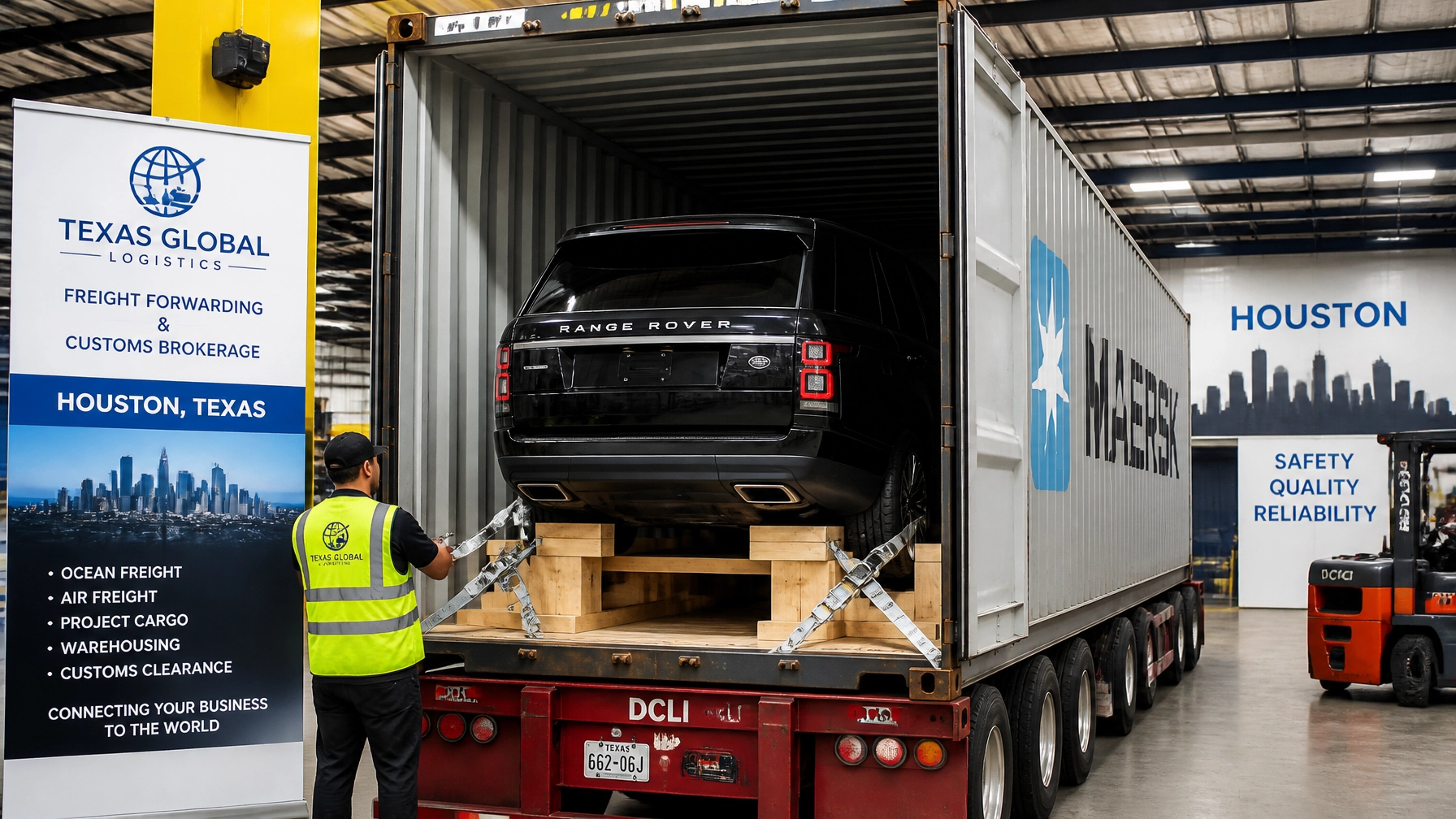
RoRo vehicles must generally be prepared for carrier handling and presented in operable condition. Container loading requires careful positioning, weight distribution, and securement. PSI’s vehicle-handling process uses custom timber blocking and high-grade strapping to reduce movement during handling and ocean transit. Read more about PSI’s vehicle securement approach.

What documents are required for a hands-free vehicle export?
Start with a clear original title, ownership documentation, a bill of sale or commercial invoice, valid identification, and complete shipper and consignee details. PSI can organize the export workflow and guide the required filings, while the vehicle owner remains responsible for providing accurate ownership and transaction documents.
For a U.S.-titled used vehicle, U.S. Customs and Border Protection requires the original certificate of title or certified copy, plus two complete copies. If a lien or lease appears on the title, written authorization from the lienholder or third-party owner may also be required.
Common documents include:
- Original vehicle title or approved ownership document
- Lien release or export authorization, when applicable
- Bill of sale or commercial invoice
- Vehicle VIN, year, make, model, and value
- Shipper’s government-issued photo ID or passport
- Nigerian consignee’s name, address, and contact details
- Booking information and transport instructions
- Export filing information, including the AES/EEI filing and ITN when required
- Bill of lading after the vehicle is loaded
- Nigeria-side documents such as Form M, PAAR, and any applicable compliance certificates
For vessel or aircraft exports, CBP requires the vehicle and required documents to be presented at least 72 hours before export. PSI’s documentation guidance helps you organize the information before the vehicle reaches the export stage. For official U.S. requirements, review CBP’s motor vehicle export guidance.
How should you prepare a car before pickup?
Prepare the vehicle by confirming its condition, photographing existing damage, removing prohibited or personal items, gathering all keys, checking fluid and battery requirements, and ensuring the VIN matches the title. Preparation reduces avoidable handling issues and gives both shipper and receiver a useful condition record.
Use this practical checklist:
- Confirm operability: For RoRo, verify that the vehicle starts, rolls, steers, and brakes.
- Record the condition: Photograph all sides, the interior, odometer, VIN plate, wheels, and existing marks.
- Remove personal items: Follow the carrier’s rules, especially for RoRo shipments.
- Secure loose equipment: Remove or secure detachable accessories, roof-rack items, and fragile contents.
- Prepare the keys: Provide ignition, door, trunk, and wheel-lock keys as applicable.
- Check fuel and battery requirements: Follow the shipping line’s current safety instructions.
- Confirm vehicle measurements: SUVs, oversized tires, modifications, and roof accessories can affect pricing.
- Keep documents accessible: Do not place original title documents inside the vehicle.
PSI can coordinate pickup and warehouse handling so the vehicle moves through one organized workflow instead of several disconnected vendors.
How does PSI coordinate pickup, secure handling, and tracking?
PSI combines signature door-to-door pickup coordination, Houston warehouse handling, streamlined documentation, secure vehicle preparation, and instant live tracking. This single-point workflow reduces coordination work for the shipper and provides milestone visibility from origin handling through ocean transport and destination delivery.
PSI’s Houston facility is located at 8718 WESTPARK DR, HOUSTON, TX 77063. Vehicle pickup is quoted according to location, service requirements, and shipment method. PSI also offers complimentary Houston-area air cargo pickup for qualifying air shipments weighing 13 pounds or more; vehicle pickup arrangements should be confirmed separately because cars generally move by ocean freight.
The company’s live tracking system provides shipment updates and milestone information. Tracking does not eliminate carrier, port, customs, or weather variables, but it gives you a clearer view of the shipment’s progress and helps the receiving party plan ahead.
What timeline should you plan for from Houston to Nigeria?
Plan for approximately 4–6 weeks of ocean transit after vessel departure, with additional time for pickup, export clearance, loading, Nigerian port processing, customs, and final delivery. The actual schedule depends on documentation readiness, vessel space, routing, port conditions, inspections, and clearance activity.
A practical planning sequence is:
- Pre-shipment preparation: Vehicle review, quote approval, document collection, and booking.
- Houston pickup and export handling: Inland movement, warehouse processing, inspection, and loading.
- Ocean transit: Often several weeks, depending on the selected service and route.
- Nigeria arrival and clearance: Customs assessment, duty payment, terminal procedures, and release.
- Final delivery: Transport from the port or warehouse to the consignee’s receiving address.
Avoid booking around an inflexible arrival date without a schedule buffer. A professional forwarder provides estimated milestones while clearly explaining that carrier and customs timelines can change.

How can you reduce avoidable car-export charges?
Reduce avoidable costs by verifying vehicle eligibility before purchase, comparing RoRo and container options, submitting accurate documents early, removing unauthorized cargo, confirming SUV dimensions, and requesting an itemized quote. Early document review also helps limit storage, correction, and rehandling charges when issues arise.
Before booking, ask for written clarification on:
- What the quoted ocean freight includes
- Whether Houston pickup is included or billed separately
- Whether export filing and documentation handling are included
- The destination port and delivery terms
- Insurance options and exclusions
- Destination charges not included in the freight quote
- Potential SUV, oversized, non-running, or modified-vehicle surcharges
- Customs duties, taxes, and broker charges that remain payable in Nigeria
No freight forwarder can control every carrier or customs variable. Transparent planning means identifying those variables before the vehicle moves.
How do you start a Houston-to-Nigeria car shipment with PSI?
Start by sending PSI the vehicle’s VIN, year, make, model, condition, pickup location, destination city, title status, and preferred shipping method. The team can then review the shipment, identify documentation needs, compare available service options, and prepare a clear estimate.
PSI Global Logistics supports international ocean freight, air freight, express freight, procurement, inventory management, documentation coordination, and door-to-door logistics. For sedans and SUVs moving from Houston to Nigeria, the goal is straightforward: one organized process, clear paperwork, secure handling, responsive support, and live shipment visibility.
Call 713-589-2925, visit 8718 WESTPARK DR, HOUSTON, TX 77063, or explore PSI Global Logistics to begin.
What should you know before exporting a car from Houston to Nigeria?
The most important steps are selecting a suitable shipping method, confirming Nigerian import eligibility, preparing a complete title and document package, protecting the vehicle during handling, and budgeting for destination charges separately from ocean freight. The right logistics partner coordinates these moving parts without hiding important cost or timing variables.
Frequently Asked Questions
Is RoRo cheaper than container shipping for a sedan?
RoRo is usually less expensive for one running sedan because the vehicle is loaded directly onto a specialized vessel deck. Container shipping may be preferable for higher-value vehicles, non-running vehicles, or shipments requiring additional protection. Final rates depend on current carrier pricing, dimensions, routing, and availability.
Can PSI pick up my vehicle in Houston?
PSI coordinates door-to-door vehicle pickup based on the vehicle’s location, condition, and selected service. Pickup pricing should be confirmed in the shipment estimate. PSI also provides complimentary Houston-area pickup for qualifying air cargo shipments weighing 13 pounds or more.
What title does CBP require for vehicle export?
For a U.S.-titled used vehicle, CBP generally requires the original certificate of title or a certified copy, plus two complete copies. A lienholder or lessor may also need to provide written export authorization. Review the current CBP motor vehicle export requirements.
How long does shipping from Houston to Nigeria take?
Ocean transit commonly takes approximately 4–6 weeks after departure, but the complete process takes longer because it includes pickup, export processing, loading, Nigerian port procedures, customs clearance, and final delivery. Timelines are estimates and may change due to carrier schedules or port conditions.
Can I put personal belongings inside the vehicle?
Personal belongings are commonly restricted or prohibited in RoRo vehicles. Container shipments may allow approved cargo under specific loading, declaration, and customs rules. Always disclose additional items to PSI before packing. Undeclared cargo can create compliance, handling, or clearance problems.
How do I request a transparent estimate?
Provide the VIN, vehicle type, dimensions, condition, pickup location, destination, title status, and preferred RoRo or container method. PSI provides estimates upon request through its shipping estimate service and can explain which charges are included or excluded.









Leave A Comment