

8718 WESTPARK DR, HOUSTON, TX 77063
713-589-2925
What do Incoterms decide for a Houston-to-Nigeria shipment?
Incoterms® 2020 clarify which party arranges and pays for transport, export and import formalities, and insurance, and where the risk of loss transfers. They do not determine ownership, payment timing, or every contract detail. For Houston-to-Nigeria freight, name the exact place or port and state “Incoterms 2020” in the sales agreement.
That precision matters. “CIF Nigeria” is not specific enough to tell teams which destination port applies. A clearer example is “CIF Lagos Port Complex, Apapa, Nigeria, Incoterms 2020.” Likewise, identify an exact Houston pickup point for EXW or the named port for FOB.
The four terms below create different handoffs. The key distinction: who pays for a leg of the journey is not always the party carrying risk during it.

What does EXW mean for a Nigerian buyer collecting cargo in Houston?
Under EXW, the seller makes the goods available at a named location, such as its Houston warehouse. The buyer arranges pickup, loading, export clearance, freight, insurance, Nigerian import clearance, duties, and delivery. Risk transfers when the goods are made available, not when they reach Lagos.
EXW can appear straightforward in a quote, but it places substantial coordination on the buyer. The buyer may need to manage U.S. export formalities even though the seller controls the goods and may hold information needed to complete them.
For exports, discuss whether FCA (Free Carrier) is more workable. Under FCA at the seller’s premises, the seller loads the buyer-arranged vehicle and handles export clearance; risk transfers when the goods are handed over as agreed. A freight forwarder can help align the named handoff point with the actual pickup plan.
What does FOB mean when shipping by sea from Houston?
FOB applies to sea and inland-waterway transport. The seller delivers when the goods are loaded on board the buyer-nominated vessel at the named port of shipment. Risk transfers there. The buyer arranges and pays for the main sea carriage, Nigerian import clearance, duties and onward delivery.
A typical term might specify “FOB [named Houston-area port], Incoterms 2020.” The seller generally handles export clearance and delivery to the vessel; the buyer selects the vessel and should arrange cargo insurance because the seller is not required to provide it under FOB.
FOB is not the right term for air freight. It can also be a poor fit when containerized cargo is handed to a carrier at a terminal before it is loaded on board. In that situation, FCA may better match the real delivery point and risk transfer. Confirm the term with your seller and logistics provider before the invoice is finalized.
What does CIF cover, and who carries risk on the way to Lagos?
With CIF, the seller contracts and pays for sea freight and insurance to the named destination port. However, risk transfers to the buyer once the goods are on board at the origin port, not when they arrive in Lagos. The buyer generally manages Nigerian import clearance, duties, taxes, and onward delivery.
CIF may suit a Nigerian importer who wants the Houston seller to arrange the ocean booking and insurance while the importer remains responsible for local import formalities. But “freight paid” does not mean “risk stays with the seller.” Review the insurance certificate and coverage conditions; consider whether additional cover is appropriate for the cargo.
CIF is a sea-only rule, not an air-freight term. Use an exact destination, such as “CIF Lagos Port Complex, Tin Can Island, Nigeria, Incoterms 2020,” and confirm which destination charges and delivery steps are included in the seller’s freight contract.
What does DDP require from the seller in Nigeria?
DDP means the seller arranges delivery to the precisely named destination, clears the goods for import, and pays applicable import duties and taxes. Risk remains with the seller until the goods arrive on the delivering vehicle, cleared for import and ready for unloading. The buyer normally unloads.
DDP can simplify the buyer’s involvement, but it places the heaviest obligations on the seller. Before agreeing, confirm that the seller, or its Nigerian partner, can legally and practically manage import clearance, tax payments, and delivery to the named point. A quote that says only “DDP Lagos” leaves critical details open.
For a Nigerian importer with an established local clearance process, FOB or CIF may provide clearer control over the import side. Treat DDP as a carefully verified arrangement, not a shortcut around confirming who acts as importer and how local requirements will be met.
Which term makes sense for Houston-to-Lagos cargo?
For ocean freight, choose FCA when the Nigerian buyer controls the main carriage and needs the Houston seller to handle export clearance. FOB can work when the buyer nominates a vessel and the handoff is genuinely on board. CIF suits buyers who want the seller to arrange sea freight and insurance, while handling Nigerian imports themselves.
These are starting points, not one-size-fits-all answers. Choose based on who can manage the export and import steps, who controls the transport booking, and where the parties want risk to transfer. For DDP, first confirm the seller’s ability to meet its Nigerian obligations. For EXW, assess whether the buyer can realistically coordinate pickup and U.S. export formalities.
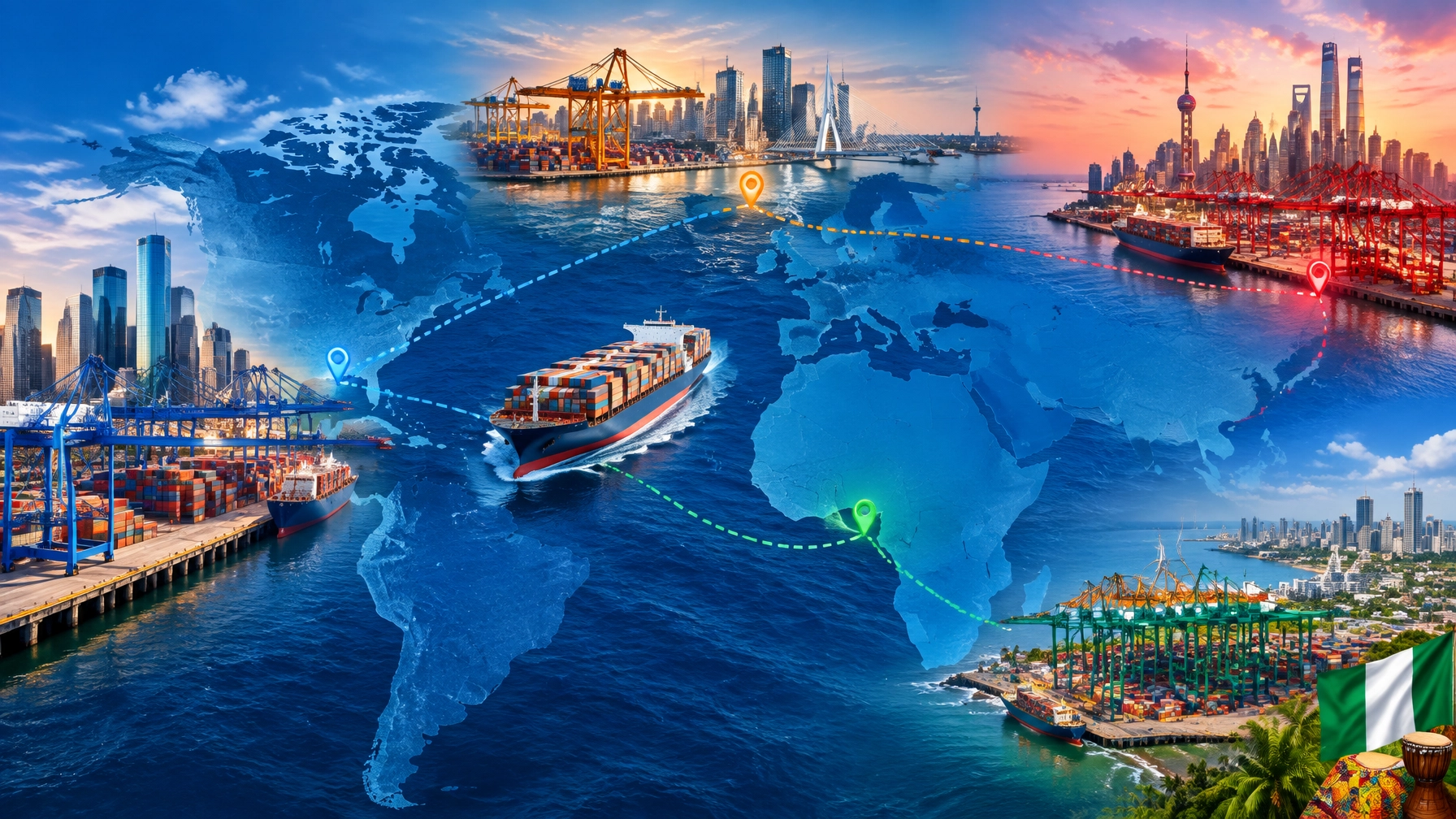
For shipments through international seaports, write the exact port and named point in the contract. Houston and Lagos connect into wider networks of international seaports and the major seaports of the world, but a broad destination label does not replace a precise delivery term. PSI Global Logistics supports international shipping coordination through its freight services.
How do the terms work differently for air freight?
EXW and DDP can apply across transport modes, but FOB and CIF are designed for sea and inland-waterway shipments, not air. For air cargo, discuss FCA, CPT, CIP, or DAP with your trading partner. The right choice depends on who arranges carriage, provides insurance, handles import formalities, and bears risk at each handoff.
With air freight, the transport document is an Air Waybill (AWB), not an ocean Bill of Lading. If the Nigerian buyer arranges the main carriage, FCA may provide a clear Houston handoff. If the seller books air transport, agree on a suitable term and named destination point rather than adapting a sea-only rule.
PSI’s air freight services support Houston-to-Nigeria shipments, with complimentary pickup for air cargo weighing 13 lb or more within greater Houston. Door-to-door pickup options, efficient workflows, documentation support, and instant live tracking help keep the handoffs visible and coordinated.

Which documents should teams align before the cargo leaves Houston?
Confirm the commercial invoice, packing list, transport document, and agreed Incoterm before shipment. For Nigerian imports, the importer also coordinates Form M and PAAR requirements, plus any product-specific permits or certificates. Consistent descriptions, quantities, values, ports, and shipment details across documents help keep the transaction aligned.
The Nigerian importer typically coordinates Form M through its Authorized Dealer Bank before shipment. The shipment’s final documents then support the PAAR process. Requirements may differ by product, so verify current instructions with the bank, a licensed Nigerian customs agent, Nigeria Customs Service, and relevant regulators.
A practical document check includes:
- Commercial invoice: legal buyer and seller details, goods description, quantity, value, currency, country of origin, and the full Incoterm with named place.
- Packing list: package count, contents, marks, dimensions, and net and gross weights.
- Transport document: Bill of Lading for ocean freight or Air Waybill for air.
- Form M and PAAR: coordinate with the Nigerian importer and its bank; confirm the required filing sequence.
- Insurance and permits: confirm coverage under the selected term and identify any applicable product approvals, such as SONCAP or NAFDAC documentation.
The Nigerian Ports Authority’s import and export guidelines outline port procedures. The Nigeria Trade Portal provides trade information, including certificate and permit resources. Check current requirements before dispatch; product rules and filing processes can change.

How can shippers make the handoff easier to manage?
Agree on the Incoterm before the seller issues the final invoice, then make sure the named point matches the actual cargo handoff. Align the sales contract, Form M data, invoice, packing list, and transport booking. A hands-free logistics process, documentation expertise, and clear updates can reduce avoidable coordination gaps.
PSI Global Logistics supports efficient logistics workflows and streamlined documentation, including commercial invoices, packing lists, Air Waybills, Form M, and PAAR coordination. Its instant live tracking provides real-time cargo updates, while signature door-to-door pickup services, including complimentary Houston air cargo pickup for shipments of 13 lb or more within greater Houston, support a more connected shipping process. Exceptional customer support adds another layer of help when a shipment needs attention.
What are common questions about Incoterms for Nigerian imports?
The most important points are simple: state the version and exact named place, understand where risk transfers, and confirm who handles each customs step. EXW, FOB, CIF, and DDP divide responsibilities differently; no term removes the need to align shipping documents and Nigerian import requirements.
Does CIF mean the seller is responsible until cargo reaches Lagos?
No. Under CIF, the seller pays for sea freight and insurance to the named destination port, but risk generally transfers when the goods are loaded on board at the origin port.
Can I use FOB for air freight from Houston?
No. FOB is for sea and inland-waterway transport. For air freight, discuss a suitable term such as FCA, CPT, CIP, or DAP, based on the agreed responsibilities and delivery point.
Who pays Nigerian import duties under DDP?
Under DDP, the seller is responsible for import clearance and applicable duties and taxes. Confirm in advance that the seller can meet Nigerian legal and operational requirements for the arrangement.
Should a Nigerian importer choose EXW to get a lower quote?
Not automatically. EXW places pickup, loading, export clearance, freight, insurance, and import responsibilities on the buyer. Compare the full responsibilities and risk handoff, and consider whether FCA better fits the export process.
When should the importer arrange Form M?
The Nigerian importer should coordinate Form M through its Authorized Dealer Bank before shipment. Confirm the current process and required documents with the bank and relevant Nigerian authorities before dispatch.







Leave A Comment