
8718 WESTPARK DR, HOUSTON, TX 77063 | 1-713-589-2925 | INFO@PSISHIPPING.COM

In the blink of an eye, the global shipping landscape has shifted yet again. It's been another fast and busy year for those of us in the logistics trenches, and if there is one question that keeps landing in our inbox at PSI Global Logistics, it’s this: "Which container do I actually need?"
Please accept apologies in advance if I get a little too excited about steel boxes, but at least in my opinion, choosing the right container is the single most important decision you'll make for your bottom line. Whether you are moving heavy machinery to Lagos or delicate electronics to London, the "standard" choice isn't always the "smart" choice.
So, without further adieu, let’s dive into the world of container types and sizes to ensure your cargo finds its perfect match.
The Workhorses: Standard Dry Containers (20ft & 40ft)
It goes without saying that the 20-foot and 40-foot dry containers are the celebrities of the shipping world. They handle about 90% of all "dry" cargo, think boxes, pallets, barrels, and even small vehicles.

The 20ft Standard Container
This is often the go-to for heavy, dense cargo. Why? Because while it’s smaller in volume, it has a surprisingly high weight capacity.
- Internal Dimensions: ~19'4" L x 7'8" W x 7'10" H
- Capacity: ~1,172 cubic feet
- Best For: Heavy machinery parts, minerals, or small-batch inventory.
The 40ft Standard Container
When you have more volume than weight, the 40-footer is your best friend. It offers double the space but isn't necessarily twice the price in terms of freight rates.
- Internal Dimensions: ~39'5" L x 7'8" W x 7'10" H
- Capacity: ~2,389 cubic feet
- Best For: Furniture, consumer goods, and large quantities of palletized freight.
What’s a High Cube (HC)?
You might hear us mention "High Cube" containers. To be sure, these look almost identical to standard containers, but they offer an extra foot of vertical height. This is a lifesaver for cargo that is just a bit too tall for a standard unit or when you’re trying to maximize every square inch of volume to optimize costs.
When Things Get Chilly: The Reefer Container
If you are shipping perishables, chemicals, or pharmaceuticals, the standard dry container is out of the question. You need a "Reefer."

Refrigerated containers (Reefers) are essentially large, mobile refrigerators. They are capable of maintaining temperatures ranging from -30°C to +30°C. But here is the catch: because of the thick insulation and the bulky refrigeration unit, the internal space is slightly smaller than a standard container.
Additionally, managing Reefers requires expert documentation and real-time monitoring. At PSI Global Logistics, we utilize a modern tracking system to ensure your cold chain remains unbroken from our Houston hub to the final destination.
Thinking Outside the Box: Open Top and Flat Rack
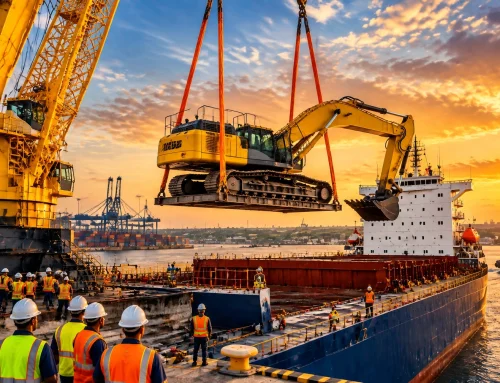
Sometimes, your cargo simply refuses to fit through a standard door. For the heavy-duty stuff, industrial generators, construction vehicles, or oversized pipes, we look toward specialized equipment.

Open Top Containers
As the name suggests, these have a removable tarpaulin instead of a solid roof. This allows for loading via crane from the top.
- Best For: Over-height machinery or bulky items that can’t be easily maneuvered through side doors.
Flat Rack Containers
These have no side walls and sometimes no "roof" at all, just heavy-duty end walls.
- Best For: Out-of-gauge (OOG) cargo like yachts, heavy machinery, or oversized steel structures.
- Pro Tip: Securement is everything here. Our team at PSI provides expert documentation and logistics support to ensure your heavy lift items are lashed according to international safety standards.
Why Does Choice Matter for Your Bottom Line?
You might be wondering: "Can't I just shove everything into a 40ft container and be done with it?" Well, you could, but you’d likely be leaving money on the table.
Cargo optimization is an art form. Using a 40ft container for high-density, heavy items often means you hit the weight limit while the container is only half full. Conversely, using two 20ft containers for light, bulky items will almost certainly cost more than one 40ft High Cube.
Our Houston Differentiator:
Remember, PSI Global Logistics offers complimentary Houston air cargo pickup and specialized local handling. If you’re unsure which container fits your specific business needs, we don't just guess, we calculate.
Final Thoughts: Finding Your Fit
It’s been another fast and busy year, and as global trade routes continue to evolve, staying informed is your best defense against shipping delays and hidden costs.
Please accept apologies in advance if this guide didn't cover every niche container (like the Tank container for liquids or the Ventilated container for coffee beans), there’s only so much one can fit into a single post! However, for most businesses, mastering the basics of Dry, Reefer, and Flat Rack containers is the first step toward a more efficient supply chain.
Why risk your cargo with a one-size-fits-all approach? How will your next shipment be optimized? Stay tuned to our blog for more insights, or reach out to us directly at our Houston office. We take care of the complexity so you don't have to.
Procurement Logistics 101: A Beginner’s Guide to Mastering Your Global Supply Chain
11833 CUTTEN RD, SUITE 400, HOUSTON, TX 77066 | 1-713-589-2925 | INFO@PSISHIPPING.COM

In the blink of an eye, the world of "buying things for business" has transformed into a high-stakes game of global strategy. It’s been another fast and busy year, and if you’ve found yourself scratching your head over the difference between simple "purchasing" and "procurement logistics," you aren't alone.
To be sure, procurement logistics is the invisible bridge that connects your suppliers to your production line or warehouse. It’s not just about what you buy; it’s about how, when, and where that material arrives. At PSI Global Logistics, we specialize in making that bridge as sturdy as possible.
What Exactly is Procurement Logistics?
At its core, procurement logistics involves the purchasing, inventory management, and transport of raw materials or finished goods from a supplier to a manufacturer or retailer.
Please accept apologies in advance for the jargon, but in my opinion, the best way to think about it is as a three-legged stool:
- Sourcing & Purchasing: Finding the right vendor at the right price.
- Inventory Management: Ensuring you don't have too much capital tied up in stock, but also don't run out (stockouts).
- Transport & Documentation: The literal movement of goods across borders.
The 2026 Shift: Why Resilience is King
We are seeing a massive shift in 2026. For years, the mantra was "Just-in-Time": buying only what you need exactly when you need it. But as we’ve seen, one hiccup in a global shipping lane can bring a factory to its knees.
Today, the trend is "Just-in-Case." Businesses are using inventory as a strategic buffer.
The AI Factor
How do you know how much "buffer" you need? Why? Because AI-driven demand forecasting is now the industry standard. By analyzing real-time market data, businesses can reduce forecast errors by 30-50%. It will certainly be an interesting development to watch as more small-to-medium businesses adopt these 3PL tools to compete with the giants.
Key Steps to Mastering Your Procurement Chain
If you're looking to optimize your process, start here:
1. Centralize Your Documentation
Nothing kills a procurement timeline faster than a missing commercial invoice or an incorrectly filed bill of lading. PSI Global Logistics offers expert, reliable documentation services to ensure your goods don't get stuck in customs purgatory.
2. Optimize Your Inventory Positioning
Are your goods sitting in a warehouse in Houston when they should be in Lagos? Or vice versa? Understanding your "lead time": the time between ordering and delivery: is crucial.

3. Leverage Real-Time Tracking
In today's market, "I think it’s on the ocean" is no longer an acceptable answer. Our customers at PSI rely on our instant live tracking system for real-time cargo updates. Knowing exactly where your material purchasing budget is currently floating allows for much better financial planning.
The "Amazon Effect" on Business Freight
It goes without saying that even B2B customers now expect "Amazon-like" visibility and speed. This has pushed procurement logistics into a new era of automation.
At PSI, we take care of all the complexity: from procurement including material purchasing to the final mile delivery: so our clients don't have to worry about it. Whether you are shipping heavy machinery or crucial business freight, the goal is always the same: on time and in perfect condition.
Final Thoughts: Don't Do It Alone
Managing a global supply chain is a full-time job, and doing it without a dedicated logistics partner is like trying to fly a plane while reading the manual.
So, without further adieu, why not let the experts handle it? At PSI Global Logistics, we provide more than just shipping; we provide a partnership that scales with your business. From our Houston-based support team to our global network, we are here to ensure your procurement logistics are a competitive advantage, not a headache.
It will certainly be an interesting development to watch as global trade continues to get faster and more complex. Stay tuned for our next deep dive into the world of 3PL!





Leave A Comment