
PSI GLOBAL LOGISTICS
8718 WESTPARK DR, HOUSTON, TX 77063
713-589-2925
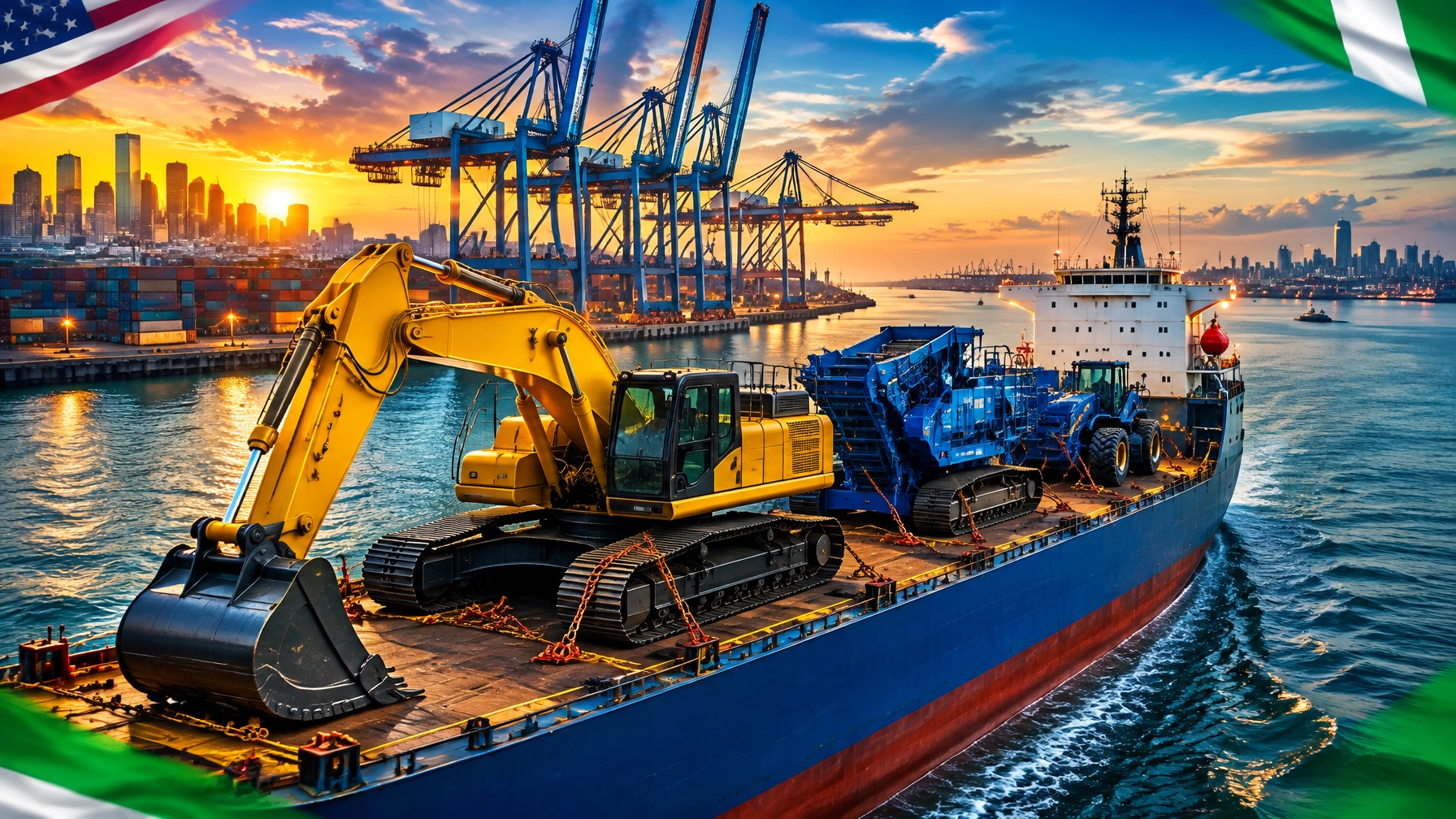
Shipping an excavator, bulldozer, crane, generator, tractor, or other oversized equipment requires more than finding vessel space. The shipment needs accurate classification, the correct cargo method, complete Nigerian import documentation, an early port plan, and reliable final-mile delivery.
This five-step guide explains how importers and exporters can move heavy machinery through major seaports of the world, including Shanghai, Singapore, Rotterdam, Jebel Ali, Houston, Lagos/Apapa, Tin Can Island, and Lekki Deep Sea Port.
What should you confirm before shipping heavy machinery through an international seaport?
Answer: Confirm the machine’s technical specifications, ownership details, condition, value, and correct HS classification before requesting freight rates. Accurate information determines the shipping method, customs treatment, equipment requirements, insurance, handling charges, and import documentation. A small error in weight, dimensions, or classification can create major delays and unexpected port costs.
Prepare a complete equipment profile containing:
- Machine type, manufacturer, model, and year
- New or used condition
- Serial number and engine number
- Length, width, height, and gross weight
- Operating weight and lifting points
- Fuel, oil, batteries, or hazardous components
- Purchase price, customs value, and country of origin
- Technical data sheet and photographs
The HS code is especially important. It affects duty assessment, regulatory requirements, and whether the machinery requires a SONCAP Product Certificate. Do not rely on a general description such as “construction equipment.” Use a precise description such as “used hydraulic excavator, 22-ton operating weight, diesel-powered, serial number included.”
For Nigerian imports, ensure the description and HS code match across the proforma invoice, commercial invoice, Form M, SONCAP records, packing list, and bill of lading.
Which international seaport and shipping method are best for oversized equipment?
Answer: Choose the international seaport based on vessel availability, terminal capability, inland delivery requirements, and the machinery’s size. Select RoRo for self-propelled equipment, flat rack for oversized units that can be lifted, break bulk for exceptional dimensions, and containers for smaller machinery or disassembled parts.

For Nigerian cargo, the principal options include:
- Apapa Port: A major Lagos gateway for containers, general cargo, and project freight.
- Tin Can Island Port: Often suitable for RoRo cargo such as trucks, tractors, and wheeled machinery.
- Lekki Deep Sea Port: A newer deep-water option for containerized and selected project cargo.
- Alternative international seaports: Depending on the origin, cargo may move through Houston, Shanghai, Singapore, Rotterdam, Jebel Ali, Busan, or another regional hub before reaching Nigeria.
| Shipping method | Best suited for | Main planning requirement |
|---|---|---|
| RoRo | Wheeled or self-propelled machinery | Equipment must normally roll on and off the vessel |
| Flat rack | Oversized machinery exceeding container dimensions | Accurate lashing, over-dimensional measurements, and lifting plans |
| Break bulk | Cranes, plant modules, and exceptionally heavy units | Project-cargo handling, cranes, stowage, and port approvals |
| Container | Smaller machines, parts, or disassembled equipment | Confirm internal dimensions, payload, and loading method |
The lowest ocean rate is not always the lowest total cost. Compare terminal handling, storage, lashing, inland haulage, customs, demurrage, and oversized-load permits before booking.
Which documents are required to clear heavy machinery in Nigeria?
Answer: Nigerian machinery imports generally require an approved Form M, applicable SONCAP Product Certificate and SONCAP Certificate, PAAR, bill of lading, commercial invoice, packing list, insurance documentation, and certificate of origin or CCVO where required. Every document must carry consistent descriptions, values, quantities, consignee details, and classification.
The Nigerian Ports Authority’s import procedure places the documentation sequence at the center of the process:
- Obtain the applicable regulatory certificate, including a SONCAP Product Certificate for regulated products.
- Activate the Product Certificate through the Nigerian Single Window.
- Open Form M with an Authorised Dealer Bank using the proforma invoice, insurance certificate, and Product Certificate where applicable.
- Submit the completed Form M for bank and Customs review.
- After Form M approval, provide the exporter with the required details for the final SONCAP process.
- Activate the SONCAP Certificate and apply for PAAR.
- Use PAAR and the supporting documents to begin customs clearance.
Your core document pack should include:
- Form M
- SONCAP Product Certificate and SONCAP Certificate, where applicable
- PAAR
- Commercial invoice
- Proforma invoice
- Packing list
- Bill of lading
- Insurance certificate
- Certificate of origin or CCVO, where required
- Equipment specifications and serial-number records
- Sector-specific permits, if applicable
The U.S. International Trade Administration’s Nigeria documentation guidance also highlights the importance of the Single Window and PAAR systems. Use a qualified freight forwarder and licensed clearing partner to verify current requirements before shipment.
How early should you book heavy machinery freight?
Answer: Book oversized machinery several weeks earlier than standard container cargo, especially during peak seasons or when the shipment needs RoRo, break bulk, special equipment, or an oversized road permit. Early booking creates time for documentation approval, vessel space, port appointments, route surveys, and contingency planning.
Heavy machinery shipments involve more coordination than ordinary freight. Before cargo reaches the origin terminal, confirm:
- Vessel sailing schedule and cargo cut-off
- RoRo acceptance or flat-rack availability
- Crane capacity and terminal handling arrangements
- Lashing, blocking, and securing requirements
- Export customs procedures
- Port congestion and potential blank sailings
- Destination terminal restrictions
- Demurrage and storage terms
- Low-loader and multi-axle trailer availability
- Oversized-load permits and police or escort requirements
Cargo should be secured against movement, moisture, corrosion, and handling impact. Drain or protect fluids where required, disconnect batteries when appropriate, secure moving components, and photograph the machine before loading.
PSI Global Logistics helps customers coordinate efficient logistics workflows and streamlined documentation processes from origin to destination. Ocean freight transit times vary by route, port, and service. PSI’s published guidance indicates a typical worldwide ocean range of 21 to 40 days, excluding customs clearance and inland delivery.
How do you arrange door-to-door delivery after the machinery reaches port?
Answer: Arrange final-mile delivery before the vessel arrives. Door-to-door planning connects customs release, terminal collection, specialized haulage, route permits, unloading equipment, site access, and live cargo updates. This prevents a cleared machine from sitting at the terminal while the importer searches for a suitable trailer or delivery crew.

A complete delivery plan should confirm:
- Final delivery address and site contact
- Road width, bridge limits, turning radius, and overhead clearances
- Low-loader or multi-axle trailer requirements
- Mobile crane or ramp requirements
- Delivery appointment and unloading sequence
- Route permits, escorts, and local restrictions
- Cargo insurance and condition inspection
- Proof of delivery and serial-number verification
PSI provides signature door-to-door pickup and delivery services to designated receiving addresses. Customers shipping from Houston can also benefit from complimentary Houston air cargo pickup when air freight is the appropriate option for urgent parts, documents, or smaller equipment components.
PSI’s live tracking system provides real-time cargo updates, while its customer support team keeps stakeholders informed as the shipment moves through pickup, export processing, ocean transit, customs, and final delivery. The objective is straightforward: ship and clear heavy machinery on time and in perfect condition.
Which major seaports of the world handle the most container traffic?
Answer: Shanghai remains the world’s busiest container port based on 2025 throughput, handling more than 55 million TEUs. Singapore and Ningbo-Zhoushan follow among the largest international seaports. These figures measure container volume, not heavy-machinery suitability, so importers must still assess vessel services, terminal equipment, and destination connections.
The table below presents approximate 2025 throughput figures compiled from port authority reporting and industry rankings. The Shanghai municipal government reported more than 55 million TEUs in 2025, while broader comparisons are available through this global container-port ranking.
| Rank | Major seaport | Country or region | Approx. 2025 throughput |
|---|---|---|---|
| 1 | Shanghai | China | 55.1 million TEU |
| 2 | Singapore | Singapore | 44.7 million TEU |
| 3 | Ningbo-Zhoushan | China | 43.9 million TEU |
| 4 | Shenzhen | China | 35.4 million TEU |
| 5 | Qingdao | China | 32.8 million TEU |
| 6 | Guangzhou | China | 27.7 million TEU |
| 7 | Busan | South Korea | 24.8 million TEU |
| 8 | Tianjin | China | 24.0 million TEU |
| 9 | Jebel Ali | United Arab Emirates | 15.6 million TEU |
| 10 | Port Klang | Malaysia | 15.0 million TEU |
A busy port can offer frequent sailings and strong infrastructure, but it can also experience congestion. The best international seaport is the one that supports the complete transport plan, from supplier pickup to Nigerian clearance and final delivery.
What are the most common questions about shipping heavy machinery?
Answer: Most heavy-machinery delays come from incomplete specifications, incorrect HS classification, missing Nigerian documentation, late freight bookings, or unplanned inland delivery. Importers reduce risk by starting early, matching every document, selecting the correct cargo method, and using one logistics partner to coordinate the shipment end to end.
Can heavy machinery ship in a standard container?
Yes, if the machinery and packaging fit within the container’s internal dimensions and payload limit. Smaller units may use a 20-foot or 40-foot container, while oversized machinery may require an open-top container, flat rack, RoRo, or break-bulk service.
Is RoRo always the cheapest option?
No. RoRo can be efficient for wheeled, self-propelled machinery, but total cost depends on origin pickup, port handling, fuel requirements, dimensions, destination charges, and final-mile haulage. Compare the complete landed cost rather than the ocean freight alone.
How long does shipping heavy machinery to Nigeria take?
Ocean transit depends on the origin, route, transshipment, vessel schedule, port congestion, and destination clearance. PSI publishes a general ocean-freight range of 21 to 40 days, while customs processing, documentation, and inland delivery add additional time.
Can PSI deliver machinery directly to a Nigerian job site?
Yes. PSI offers door-to-door delivery to a designated receiving address, subject to cargo details, customs release, route conditions, permits, and equipment requirements. The delivery plan can include specialized haulage, tracking, coordination, and final receipt confirmation.










Leave A Comment