
PSI GLOBAL LOGISTICS
8718 WESTPARK DR, HOUSTON, TX 77063
713-589-2925
Shipping heavy machinery across the Atlantic isn’t just a logistics task; it’s a high-stakes operation where precision is the only currency that matters. Whether you are moving massive excavators for a construction site in Lagos or specialized turbines for an energy project in Port Harcourt, the journey from Houston to Nigeria requires world-class expertise. At PSI Global Logistics, we turn the complexity of oversized cargo into a streamlined, automated experience.
In 2026, the logistics landscape is faster and more digital than ever. If you aren't leveraging modern tracking and efficient documentation, you're leaving your equipment: and your capital: at risk. This guide breaks down exactly how to navigate the 6,000-mile journey from the heart of Texas to the busiest ports in West Africa.
Why choose Houston for heavy machinery shipping to Nigeria?
Houston serves as the premier global gateway for heavy machinery due to its proximity to major equipment manufacturers and the Port of Houston’s specialized breakbulk capabilities. Shipping from Houston minimizes inland transit costs for Texas-based assets and offers frequent, direct vessel departures to major Nigerian ports like Tin Can Island and Apapa.
Houston is the undisputed capital of industrial logistics in the United States. For businesses shipping to Nigeria, the Port of Houston provides a strategic advantage with its massive infrastructure designed specifically for "Project Cargo": items that are too big, too heavy, or too awkward for standard containers. PSI Global Logistics taps into this ecosystem, offering a complimentary Houston air cargo pickup and seamless ground transport for heavy units directly to the terminal. By starting your journey in Houston, you gain access to the most reliable shipping lanes and the shortest transit times to West Africa, typically ranging from 17 to 30 days.
What are the best shipping methods for oversized cargo?
The two primary methods for shipping heavy machinery are Roll-on/Roll-off (RORO) and Flat Rack containers. RORO is the most cost-effective for wheeled or self-propelled machinery like tractors and trucks, while Flat Racks are ideal for static, oversized equipment that requires specialized lashing and crane loading onto container vessels.

Choosing the right method depends entirely on your cargo’s profile:
- RORO (Roll-on/Roll-off): Think of this as a giant floating parking lot. If your machinery can be driven or towed (excavators, loaders, pavers), RORO is your best friend. It’s simple, secure, and generally cheaper because it requires less manual handling.
- Flat Rack & Open Top Containers: If your equipment is non-wheeled: like industrial boilers or disassembled plant lines: we utilize Flat Racks. These units lack side walls or roofs, allowing us to load from the top or side. Our team specializes in professional lashing and securing, ensuring your 50-ton asset doesn't move an inch during mid-Atlantic swells.
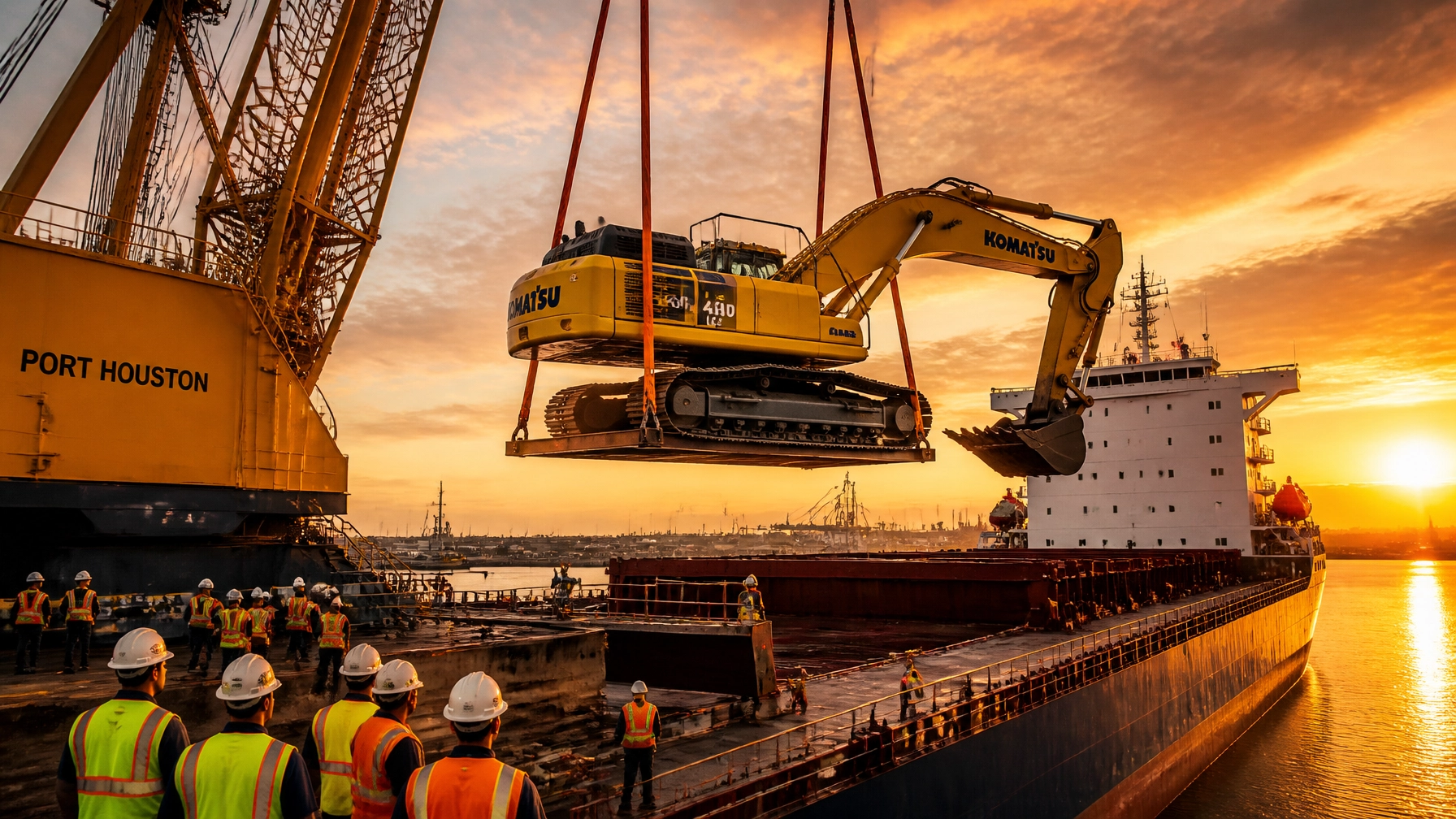
- Breakbulk: For the truly "out-of-gauge" monsters that won't fit on any platform, we arrange breakbulk shipping where the machinery is loaded directly into the ship’s hold using specialized heavy-lift cranes.
How do I handle Nigerian customs documentation for industrial equipment?
Successful clearing in Nigeria requires obtaining a Form M and a Pre-Arrival Assessment Report (PAAR) through the Nigeria Customs Integrated Information System (NICIS II). Additionally, most industrial machinery must have a SONCAP Certificate to prove compliance with Nigerian standards, along with a Clean Report of Inspection to avoid heavy fines or port delays.
The Nigerian regulatory environment is rigorous but manageable with the right partner. In 2026, the process is heavily digitized. You cannot wait until the ship arrives to start your paperwork. At PSI Global Logistics, we guide you through the "Golden Trio" of Nigerian imports:
- Form M: The essential intent-to-import document registered with the Central Bank of Nigeria.
- SONCAP: This ensures your machinery meets safety standards. Without it, your equipment could be stuck in a "demurrage trap" for weeks.
- PAAR: This is the document customs uses to calculate your duties. Accurate valuation is key here; misrepresenting the value of a $500,000 bulldozer can lead to massive penalties.
Why is real-time tracking essential for heavy equipment logistics?
Real-time tracking provides critical visibility into every stage of the 30-day transit, allowing project managers to coordinate site arrivals and labor schedules. PSI Global Logistics’ instant live tracking system gives you 24/7 updates, ensuring you know exactly when your machinery clears Houston and when it berths at Tin Can Island.

When you are shipping multimillion-dollar machinery, "I think it's somewhere in the Atlantic" is not an acceptable answer. Our automated tracking system integrates directly with vessel telematics. You receive notifications the moment your cargo is gated into the Port of Houston, when it is loaded, and the second it touches down in Nigeria. This transparency eliminates the guesswork and allows you to manage your global supply chain with total confidence.
The PSI Global Logistics Workflow: From Houston Yard to Nigerian Site
Our process is designed to be "hands-off" for our clients. We take care of the complexity so you can focus on your core business operations.
- Procurement & Pickup: We can manage the material purchasing or simply pick up your equipment from any Houston location using our heavy-haul low-loaders.
- Professional Lashing: At the port, our experts secure your machinery using industrial-grade chains and tensioners. We don't just "tie it down"; we engineer the securement based on the cargo’s center of gravity.
- Documentation Mastery: Our documentation team prepares your Bill of Lading, Export Declarations, and assists with the Nigerian PAAR process.
- Ocean Transit: Your cargo moves on world-class vessels with carriers we have spent decades building relationships with.
- Nigerian Port Handling: Upon arrival at Tin Can Island or Apapa, our local experts manage the offloading and customs clearance, ensuring a rapid exit from the terminal to avoid daily storage fees.

Heavy Machinery Shipping FAQ
How long does it take to ship from Houston to Nigeria?
The ocean transit time typically takes between 17 and 30 days. However, when you factor in Houston port lashing (3-5 days) and Nigerian customs clearance (7-14 days), you should plan for a total door-to-door timeline of 5 to 7 weeks.
What is the cost of shipping a large excavator to Lagos?
Shipping costs are calculated based on the dimensions (Length x Width x Height) and the weight of the unit. RORO is generally the most economical, but prices fluctuate based on fuel surcharges and port fees. Contact PSI Global Logistics at 713-589-2925 for an instant, accurate quote.
Does my machinery need to be cleaned before shipping?
Yes. Both US and Nigerian authorities have strict biosecurity rules. Machinery must be free of excessive dirt, seeds, or organic debris. Additionally, for RORO shipping, the unit must have working brakes and no active fluid leaks.
Can PSI handle the inland delivery within Nigeria?
Absolutely. We provide comprehensive door-to-door services. Once your machinery clears the port in Lagos or Onne, we arrange heavy-duty trailers to transport your equipment to any site across Nigeria, including remote mining or oil & gas locations.
What happens if my machinery is too big for a standard container?
This is our specialty. We utilize Flat Racks, Open Tops, or Breakbulk shipping methods. Our team handles all the specialized "Out of Gauge" (OOG) permits and lashing requirements to ensure even the largest machinery travels safely.











Leave A Comment