
PSI GLOBAL LOGISTICS | 8718 WESTPARK DR, HOUSTON, TX 77063 | 713-589-2925
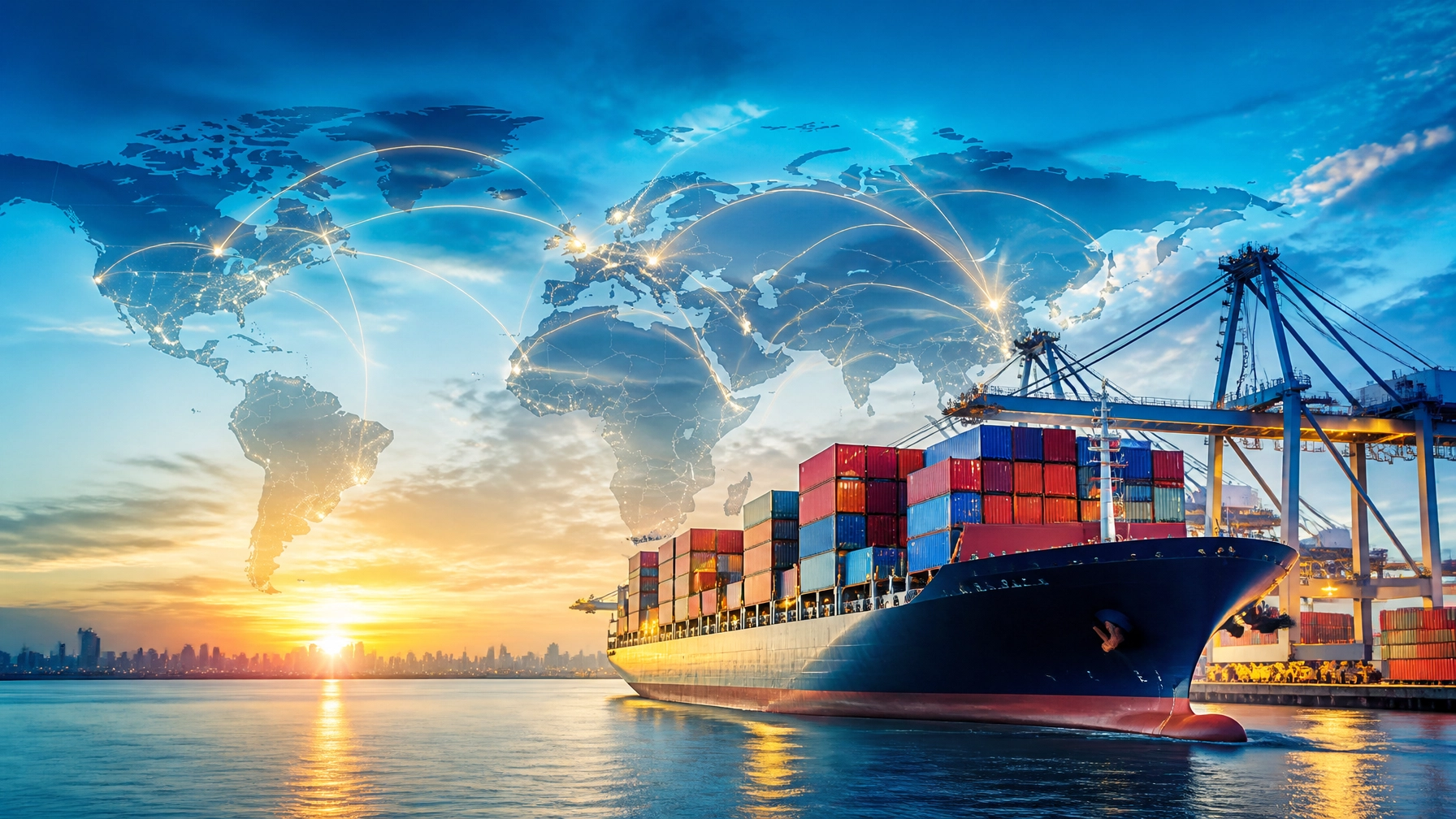
The world’s largest seaports are more than loading points. They are high-volume gateways where cargo changes hands, customs documents are reviewed, containers are routed inland, and delays can quickly become expensive.
For 2026, the leading international container seaports remain concentrated in Asia, with major hubs in the Middle East also playing a critical role in global trade. The latest rankings place Shanghai at number one, Singapore at number two, and Ningbo-Zhoushan at number three.
The ranking below uses container throughput as the primary measure. Throughput figures for 2025 are still being consolidated, so estimates vary slightly by source. For shipment planning, however, the operational reality is clear: every major seaport demands accurate documentation, reliable coordination, and strong visibility from pickup to final delivery.
What are the 10 biggest international seaports in 2026?
The 2026 ranking of the biggest international container seaports places Shanghai first, Singapore second, and Ningbo-Zhoushan third. The remaining gateways are Shenzhen, Qingdao, Guangzhou, Busan, Tianjin, Hong Kong, and Jebel Ali. These ports connect manufacturing centers, distribution networks, and consumer markets across every major trade lane.
-
Port of Shanghai, China : Approximately 55 million TEU in estimated 2025 throughput. Shanghai remains the world’s busiest container port and the primary gateway for the Yangtze River Delta.
-
Port of Singapore, Singapore : Approximately 41–42 million TEU in estimated 2025 throughput. Singapore is one of the world’s most important transshipment hubs.
-
Port of Ningbo-Zhoushan, China : Approximately 40–43 million TEU in estimated 2025 throughput. It serves major industrial and export markets in eastern China.
-
Port of Shenzhen, China : A critical gateway for South China’s manufacturing, technology, and consumer goods industries.
-
Port of Qingdao, China : A major northern China port serving industrial, automotive, agricultural, and containerized cargo.
-
Port of Guangzhou, China : Located in the Pearl River Delta, Guangzhou supports manufacturing and distribution throughout southern China.
-
Port of Busan, South Korea : A leading Northeast Asian gateway and an important transshipment center.
-
Port of Tianjin, China : The principal maritime gateway for Beijing and northern China.
-
Port of Hong Kong, China : A historic regional gateway supporting international trade and South China’s commercial network.
-
Jebel Ali Port, United Arab Emirates : The Middle East’s leading container gateway, supported by major logistics zones and connections across Africa, Asia, Europe, and the Gulf.
According to industry estimates, Shanghai, Singapore, and Ningbo-Zhoushan together handle roughly 136–140 million TEU annually. A TEU, or twenty-foot equivalent unit, is the standard measurement for container volume.
How are the world’s biggest seaports ranked?
The most common ranking method is annual container throughput, measured in TEUs. This shows how many standard container units a port handles during a year. It does not necessarily measure physical size, total cargo weight, vessel calls, terminal area, or how quickly a port processes an individual shipment.
Rankings can change depending on the reporting year and methodology. The World Shipping Council’s container port resources and Lloyd’s List port rankings are useful reference points, while 2026 industry compilations rely on the latest available 2024 and 2025 data.

What makes each major international seaport strategically important?
Each leading seaport combines high capacity with a specific geographic advantage. Shanghai and Ningbo-Zhoushan serve China’s export powerhouse. Singapore connects major east-west shipping lanes. Busan supports Northeast Asian distribution, while Jebel Ali links the Gulf with Africa, Europe, and South Asia.
The practical value of a port depends on more than its ranking. Businesses must also evaluate:
- Vessel schedules and available sailings
- Transshipment requirements
- Terminal congestion
- Inland trucking and rail connections
- Customs procedures
- Cargo type and handling requirements
- Destination-country regulations
- Port-specific fees and free-time rules
A port may be among the largest in the world and still be the wrong choice for a specific shipment if it creates a difficult inland route or requires an unnecessary transshipment.
Why do major seaports create shipping headaches?
The busiest international seaports operate at enormous scale, so small documentation or scheduling errors can create major consequences. A missing commercial invoice, incorrect HS code, late shipping instruction, or mismatch between documents can delay customs clearance and trigger storage, demurrage, or detention charges.
Common challenges include:
- Port congestion during peak seasons
- Vessel schedule changes and blank sailings
- Container availability problems
- Customs inspections
- Incorrect consignee or notify-party information
- Delayed bills of lading
- Unclear cargo descriptions
- Complicated delivery appointments
- Poor visibility after discharge
- Coordination gaps between ocean carriers, terminals, customs brokers, and truckers
The biggest risk is not simply that a vessel arrives late. The bigger problem is losing control of the shipment between origin pickup, export processing, port handling, ocean transit, destination clearance, and final delivery.
How can you ship through a major seaport without the headache?
The most reliable approach is to manage the shipment as one coordinated door-to-door movement rather than treating the seaport as an isolated handoff. Start with the correct routing, prepare documents before cargo reaches the terminal, confirm cutoffs, and maintain live visibility through every milestone.
A practical seaport shipping workflow includes:
-
Select the right gateway. Compare port location, sailing frequency, transit time, congestion exposure, and inland delivery options.
-
Confirm cargo details early. Provide accurate dimensions, weight, commodity descriptions, packaging information, and final delivery requirements.
-
Prepare documentation before the cutoff. Commercial invoices, packing lists, bills of lading, certificates, permits, and customs information must match.
-
Build in schedule flexibility. Port operations can change because of weather, labor constraints, vessel delays, inspections, and equipment shortages.
-
Track every milestone. Monitor pickup, gate-in, vessel departure, transshipment, arrival, customs release, and final delivery.
-
Coordinate the inland leg. Ocean freight is only complete when cargo reaches the consignee in good condition.
PSI Global Logistics manages these moving parts through efficient logistics workflows, streamlined documentation processes, and experienced coordination across international freight networks.

What does PSI Global Logistics handle at the world’s biggest seaports?
PSI Global Logistics coordinates international ocean freight from origin pickup through final delivery, helping businesses avoid the fragmented communication that causes delays. Our service covers commercial freight, heavy machinery, procurement support, inventory management, documentation coordination, and shipment tracking.
Businesses shipping through major seaports benefit from:
- Managed ocean freight: Secure, knowledgeable coordination for full-container and other international ocean shipments.
- Door-to-door pickup and delivery: A single logistics workflow from the shipper’s location to the consignee’s facility.
- Signature pickup services: Reliable pickup coordination, including complimentary Houston air cargo pickup when air freight is the right fit.
- Streamlined documentation: Organized shipping paperwork and process oversight reduce avoidable errors.
- Instant live tracking: Real-time cargo updates help teams monitor progress and respond quickly.
- Multimodal capability: Air, ocean, express freight, procurement, and inventory support under one logistics partner.
- Exceptional customer support: Knowledgeable assistance remains available when schedules, documents, or routing requirements change.
PSI’s international seaport reference includes information on 835 active seaports and inland ports, including UN/LOCODE information, coordinates, time zones, and available contact details. That kind of location knowledge supports better routing decisions before cargo moves.

Which documents should be ready before cargo reaches the port?
The required paperwork depends on the commodity, origin, destination, and customs rules, but most international ocean shipments require a commercial invoice, packing list, bill of lading instructions, accurate HS classification, country-of-origin information, and applicable licenses or certificates.
Before cargo is picked up, confirm:
- Shipper, consignee, and notify-party details
- Product description and HS code
- Total pieces, weights, and dimensions
- Cargo value and currency
- Incoterms
- Export and import requirements
- Required permits or certificates
- Container, seal, and booking information
- Final delivery address and receiving hours
For Nigeria-bound freight, document accuracy and inland delivery planning are especially important. Port handling, customs clearance, and final-mile transport should be planned together rather than passed between disconnected providers.
How does PSI help businesses shipping to Nigeria and globally?
PSI supports companies shipping business freight, commercial goods, and heavy machinery to Nigeria and international destinations. The focus is practical: reduce complexity, improve process control, provide shipment visibility, and coordinate the full movement so customers do not have to manage every carrier, terminal, document, and delivery appointment separately.
The best international shipping plan is not always the route through the world’s largest seaport. It is the route that balances cost, capacity, transit time, customs requirements, cargo protection, and final delivery reliability.
For support with an international seaport shipment, contact PSI Global Logistics at 713-589-2925 or visit psishipping.com.
What are the most common questions about international seaports?
The largest ports are valuable global gateways, but their scale also makes planning essential. The answers below cover common questions about rankings, throughput, documentation, tracking, and door-to-door freight coordination through major international seaports.
What is the biggest international seaport in the world?
Shanghai is the world’s biggest container seaport in the 2026 ranking. It handles approximately 55 million TEU based on estimated 2025 throughput and serves the Yangtze River Delta, one of the world’s largest manufacturing and export regions.
Is Singapore bigger than Ningbo-Zhoushan?
In the 2026 ranking, Singapore is listed at number two and Ningbo-Zhoushan at number three. However, estimated 2025 figures vary by source, with Singapore at approximately 41–42 million TEU and Ningbo-Zhoushan at approximately 40–43 million TEU.
Does the busiest seaport always provide the fastest shipping route?
No. The busiest seaport is not automatically the fastest or most cost-effective option. Transit time depends on sailing schedules, transshipment, port congestion, customs processing, inland transportation, cargo requirements, and the distance between the port and final delivery location.
What documents are needed for ocean freight?
Most ocean shipments require a commercial invoice, packing list, bill of lading information, accurate cargo classification, shipper and consignee details, and country-of-origin information. Additional permits, certificates, or customs documents may apply based on the commodity and destination.
Can PSI arrange door-to-door international shipping?
Yes. PSI Global Logistics coordinates door-to-door international freight, including pickup, ocean or air transportation, documentation workflows, tracking, customs coordination, and final delivery. PSI also provides complimentary Houston air cargo pickup when applicable.
Can PSI track cargo after it leaves the port?
Yes. PSI provides instant live tracking for real-time cargo updates. Customers can monitor key shipment milestones, including pickup, departure, arrival, and delivery, while PSI’s team coordinates the operational details behind the movement.







Leave A Comment