
8718 WESTPARK DR, HOUSTON, TX 77063 | 713-589-2925
In the blink of an eye, the logistics world has transformed from simple "box-on-a-boat" shipping to a complex science of space optimization and cost management. It’s been another fast and busy year at PSI Global Logistics, and as we navigate the ever-shifting tides of international trade, one question keeps landing on my desk: Does it really matter which container I pick?
Please accept apologies in advance if I get a bit technical, I know, I know, container dimensions aren't exactly Friday night dinner conversation. But, at least in my opinion, understanding the "why" behind your container choice is the secret sauce to slashing your landed cost, especially when shipping to a dynamic market like Nigeria.
So, without further adieu, let’s dive into the world of TEUs, FEUs, and the hidden costs that could be eating your margins.
What are the standard shipping container sizes and types for Nigeria-bound cargo?
Standard containers for Nigeria-bound cargo primarily include the 20-foot (1 TEU) and 40-foot (1 FEU) dry units, along with the 40-foot High Cube (HC). While 20ft units are ideal for heavy, dense machinery, 40ft and High Cube containers offer nearly double the volume for lighter, bulkier consumer goods and retail stock.
It goes without saying that the "standard" isn't always the "best" for every situation. To be sure, most of our clients shipping from Houston to Lagos or Port Harcourt stick to the basics, but the dimensions matter more than you think.
- 20-Foot Standard: About 20' L x 8' W x 8'6" H. It's the workhorse for heavy items like auto parts and industrial machinery.
- 40-Foot Standard: Doubling the length but keeping the height, this is perfect for furniture and textiles.
- 40-Foot High Cube: This adds an extra foot of height (9'6"). If you’ve ever tried to fit a tall piece of equipment into a standard unit only to realize you’re three inches short, you know why this is a lifesaver.
Additionally, for those looking for a "container types and sizes pdf" style reference, remember that payload capacity shifts between these. Interestingly, a 20ft container can often carry more weight (up to 28,000 kg) than its 40ft counterpart because of the structural limits of the ship and the container itself.

How does choosing a 20ft vs 40ft container impact your landed cost?
Choosing between a 20ft and 40ft container impacts your landed cost through a combination of ocean freight rates, Nigerian port fees, and inland haulage. While a 40ft container typically costs only 10-20% more in ocean freight than a 20ft, it provides 100% more volume, significantly lowering your cost-per-unit.
But either way, the math isn't just about the ocean leg. In Nigeria, many terminal and regulatory fees are charged per container, regardless of size. For example, if a port fee is ₦35,000 per box, shipping two 20ft containers instead of one 40ft container literally doubles that specific cost.
Why? Because the administrative "paperwork" (though we keep it modern and automated here at PSI Global Logistics) is often handled per unit. What’s more, our complimentary Houston air cargo pickup and expert documentation services help streamline the front end, but once that box hits Apapa or Tin Can, the physical size dictates your trucking costs. In Nigeria, 40ft containers are often more expensive to move inland due to road constraints and the specialized trailers required. It will certainly be an interesting development to watch as infrastructure improves, but for now, the 20ft remains the "king of the road" for inland Nigeria.
When should you use specialized container types like reefers or flat racks?
Specialized containers like reefers are essential for temperature-sensitive goods (pharmaceuticals, perishables), while flat racks and open-tops are required for oversized machinery that cannot fit through standard doors. These options carry higher freight premiums and destination charges but are necessary for cargo integrity and safety.
How will it be funded? Stay tuned, or rather, stay informed on your CIF (Cost, Insurance, and Freight) values. Because specialized containers cost more to ship, they increase the "Freight" portion of your CIF, which in turn increases the Customs Duty and VAT you pay in Nigeria.
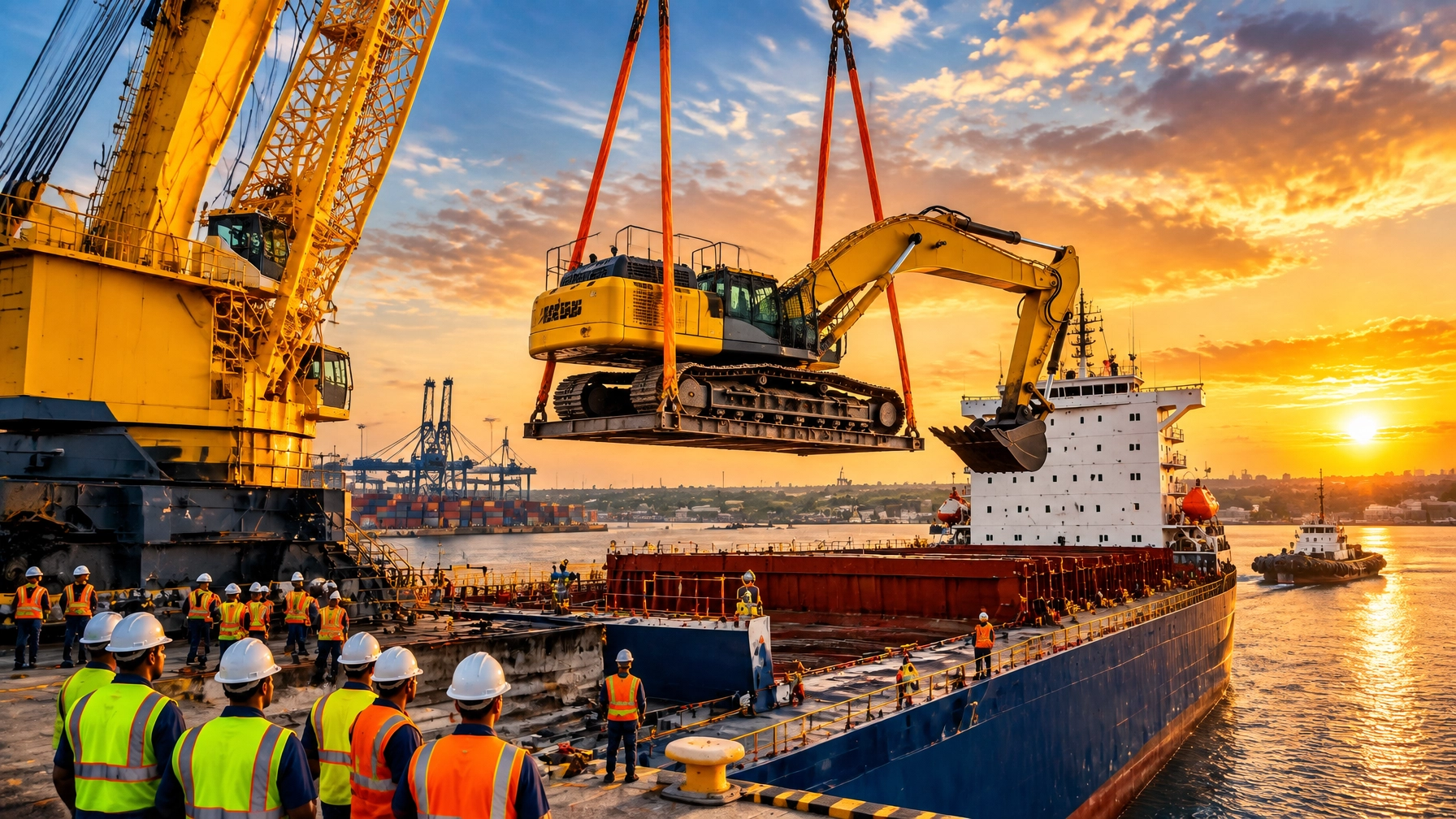
For our clients moving heavy machinery, a core part of our global supply chain solutions, we often recommend flat racks. It’s a bit of a balancing act. You pay more for the equipment, but you save on the potential damage and labor costs of trying to dismantle complex machinery just to fit it into a standard dry box.

Why is the 'landed cost' calculation different for FCL vs LCL shipments to Nigeria?
FCL (Full Container Load) landed costs are calculated based on flat per-container rates, whereas LCL (Less than Container Load) costs are based on volume (CBM). FCL becomes more cost-effective once your cargo exceeds roughly 15-18 CBM, as LCL often incurs higher per-unit destination and handling charges in Nigerian ports.
It’s a common trap: seeing a low LCL rate of, say, $90 per CBM and thinking it’s a steal. But you have to factor in the "de-groupage" fees and terminal handling on the Nigerian side. Sometimes, shipping a half-empty 20ft container (FCL) can actually be cheaper and faster because you avoid the delays of the warehouse stripping process.
At PSI, we offer a live tracking system that gives you real-time updates whether you’re shipping a single crate or a fleet of 40ft High Cubes. We take care of all the complexity, from the Houston warehouse to the final mile, so you don't have to worry about it.

The Nigeria Factor: Local Realities
Shipping to Nigeria isn't like shipping to Rotterdam. To be sure, the port congestion and road conditions in Lagos mean that your container choice has a "tail" of costs.
- Demurrage: If your documentation isn't perfect (which is where our expert team comes in), your container sits. A 40ft container often attracts higher daily demurrage rates than a 20ft.
- Trucking Access: If your warehouse is in a tight corner of Mushin or a busy market area, a 40ft truck might not even be able to get through the gate. Suddenly, you're paying for "trans-loading" to smaller vans, which sends your landed cost through the roof.
Data Point Breakdown: An Illustrative Example
- 20ft FCL to Nigeria: ~$1,630 Ocean Freight + ~$1,200 Local Fees = $2,830 Total
- 40ft FCL to Nigeria: ~$1,720 Ocean Freight + ~$1,300 Local Fees = $3,020 Total
- The Result: For just $190 more, you get double the space. If your goods are light, the 40ft is a no-brainer.
Frequently Asked Questions
Q: What is a TEU?
A: TEU stands for Twenty-foot Equivalent Unit. It is the standard unit of measurement in the shipping industry. One 20ft container equals 1 TEU, while a 40ft container equals 2 TEUs.
Q: Does PSI Global Logistics help with material purchasing?
A: Yes! We offer procurement and inventory management services in addition to our freight forwarding, helping you source and ship in one seamless process.
Q: How do I know if my cargo needs a High Cube container?
A: If your cargo is taller than 7'10" (2.39m), it likely won't fit comfortably in a standard dry container. A High Cube provides an internal height of approximately 8'10" (2.70m).
Q: Can I track my container in real-time?
A: Absolutely. Our fully automated system provides instant live tracking for all cargo, ensuring you know exactly where your investment is at any given moment.
Q: Where is your Houston office located?
A: We are located at 8718 WESTPARK DR, HOUSTON, TX 77063. You can reach us at 713-589-2925 for any shipping inquiries or to arrange a pickup.
I’ll be the first to admit that this guide might not cover every single edge case: logistics is, after all, a field full of surprises. However, by matching your cargo density to the right container type and considering the unique Nigerian landscape, you’re already miles ahead of the competition.
If you’re feeling overwhelmed by the choices, don’t hesitate to reach out. We’re here to handle the heavy lifting (literally and figuratively).

Leave A Comment