
ADDRESS: 8718 WESTPARK DR, HOUSTON, TX 77063
PHONE: 713-589-2925
EMAIL: INFO@PSISHIPPING.COM
In the blink of an eye, we’ve already zoomed past the first two months of 2026, and if you’re in the world of international trade, you’ve likely felt the shift in the atmosphere. Here we are, early March, and the logistics landscape in West Africa, specifically Nigeria, is looking more dynamic than ever. If you feel like the pace of business is accelerating, you aren't imagining it. At PSI Global Logistics, we’ve been tracking these changes closely, and at least in my opinion, we are currently witnessing a "perfect storm" of policy and technology that is making air freight the undisputed heavyweight champion of 2026.
So, without further adieu, let’s dive into why your business should be looking at the skies this year, and more importantly, how the new ECOWAS fiscal reforms are about to put some serious cash back into your operational budget.
The ECOWAS Game Changer: What Happened on January 1st?
To be sure, policy shifts in West Africa can sometimes feel like a slow-moving tide, but the fiscal reform that kicked in on January 1, 2026, was more like a seismic wave. The Economic Community of West African States (ECOWAS) officially implemented a sweeping reduction in aviation-related taxes and charges across its member states.
While the headlines in the mainstream media have been buzzing about cheaper vacation tickets for travelers, the real "behind-the-scenes" victory is for the cargo industry. The reform included a massive 25% reduction in passenger and security charges and, crucially, the elimination of several non-aviation taxes that previously bloated the cost of landing a plane in hubs like Lagos or Abuja.
Why does this matter for your cargo? It’s simple math. When the cost of operating an aircraft into a region drops, those savings eventually trickle down to the freight rates. For years, West Africa was known for having some of the highest aviation fees in the world. In 2026, that narrative is finally changing. We are seeing a concerted effort to deepen regional integration, facilitating the movement of not just people, but the goods and services that drive the Nigerian economy.

Why Air Freight is No Longer "The Expensive Alternative"
It goes without saying that air freight has traditionally been viewed as the "luxury" option, the fast but expensive route you only take when something is on fire (metaphorically speaking). However, in the current 2026 climate, that gap is narrowing faster than we anticipated.
What’s more, the traditional sea freight routes are still grappling with infrastructure bottlenecks at major ports. While seaports are essential, the agility of air cargo in a post-tax-cut ECOWAS region is hard to beat. When you factor in the 20% to 40% drop in certain ticket prices and the associated reduction in aircraft handling fees, the "landed cost" of your goods via air becomes much more competitive.
Additionally, the speed of air freight in 2026 allows businesses to maintain "lean" inventories. Why pay for massive warehouse space in Lagos when you can ship precisely what you need from Houston and have it cleared and ready in a fraction of the time? At PSI Global Logistics, we’ve optimized our customized solutions to help businesses leverage this "just-in-time" delivery model, which is now more affordable than ever thanks to these tax breaks.
The Nigeria Factor: A Hub Reborn
Nigeria remains the heartbeat of the ECOWAS region, and the impact of the 2026 tax cuts is most visible at Murtala Muhammed International Airport (LOS) and Nnamdi Azikiwe International Airport (ABV). As the largest economy in Africa, Nigeria stands to gain the most from cheaper air corridors.
For our clients shipping from the US to Nigeria, this means more frequent flights and more reliable schedules. The elimination of redundant taxes has encouraged more carriers to increase their cargo belly capacity or introduce dedicated freighters into the West African route.
But how will this be funded? Stay tuned, because the ECOWAS commission believes that the surge in volume, expected to hit 15 million annual passengers and record-breaking cargo tonnage, will more than make up for the lower per-unit tax rate. It’s a classic volume play, and if you’re a business owner in Nigeria, you should be the one taking advantage of it.

PSI Global Logistics: Security, Modernity, and Automation
Now, while the government is doing its part with tax cuts, you still need a partner who knows how to navigate the 2026 technological landscape. At PSI Global Logistics, we haven't just sat back and watched the news; we’ve invested heavily in making sure our services are as modern as the aircraft carrying your goods.
1. Instant Live Tracking
Gone are the days of wondering where your pallet is sitting. In 2026, transparency is the minimum requirement. Our instant live tracking system gives you real-time visibility from our Houston warehouse all the way to the final destination in Nigeria.
2. Automated Documentation
One of the biggest "hidden costs" in logistics isn't the fuel, it’s the delays caused by paperwork errors. We’ve automated our documentation process to ensure that your shipments comply with the latest 2026 ECOWAS regulations. This means fewer customs hold-ups and faster clearance.
3. Secure Handling
High-value cargo, whether it’s electronics for retail or specialized parts for the oil and gas sector, requires a level of security that we take very personally. Our Houston facility at 8718 Westpark Dr is equipped with state-of-the-art surveillance and handling equipment to ensure your goods are treated with the respect they deserve.
Industry Spotlight: Who Wins Big in 2026?
It’s interesting to watch which industries are pivoting most aggressively to air cargo this year.
- Telecommunications: With the rapid expansion of 5G and satellite internet infrastructure in rural Nigeria, telecommunications logistics has become a race against time. The 2026 tax cuts have made it feasible to fly in heavy networking equipment that used to wait weeks for a ship.
- Automotive: While heavy vehicles still move by sea, high-value spare parts and automotive electronics are moving exclusively by air to keep Nigeria’s transport fleet moving.
- Construction: Specialized tools and precision instruments for large-scale construction projects are now arriving in days, not months, keeping billion-naira projects on schedule.
Is it Time for an Air Charter?
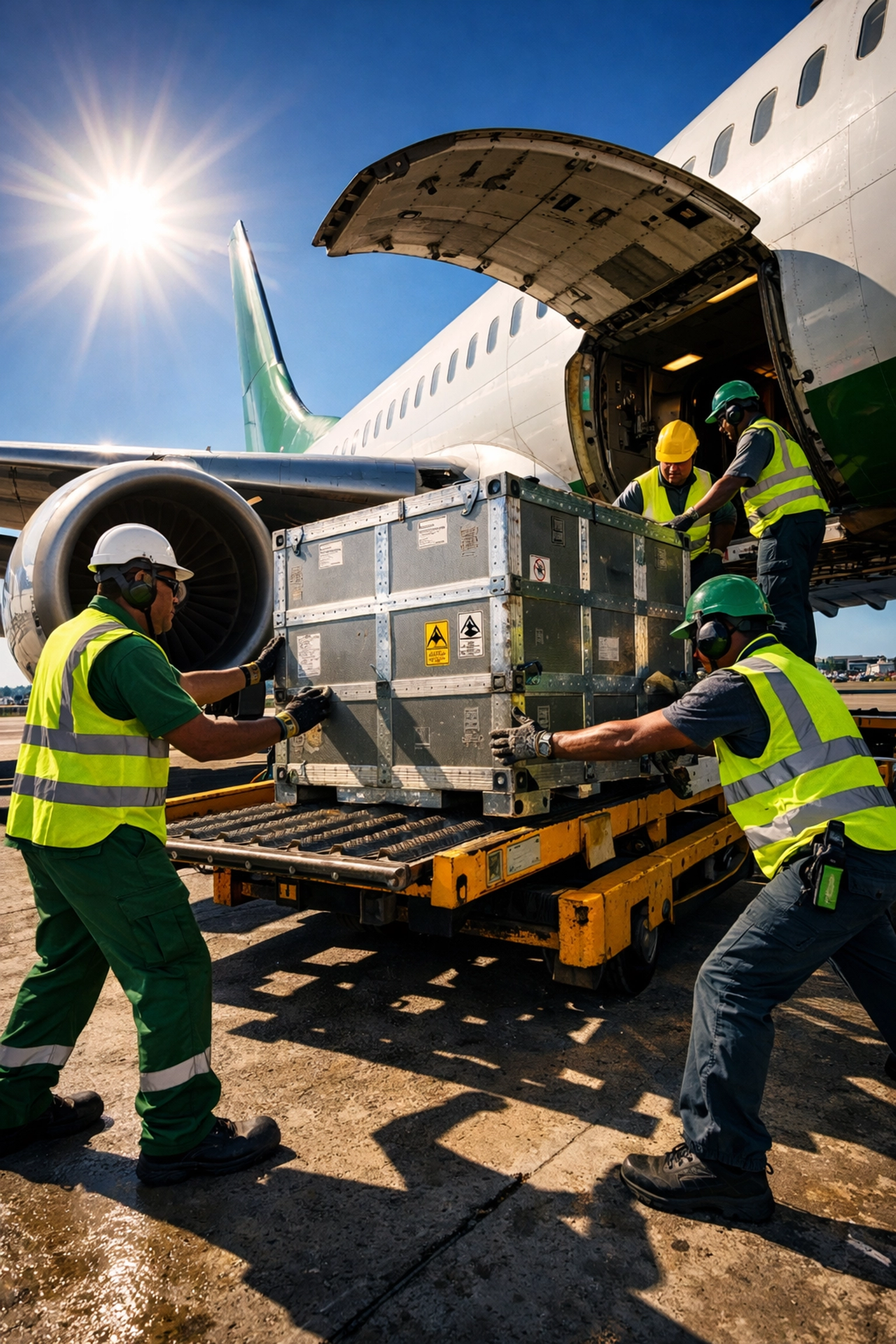
Sometimes, the standard scheduled flights just don't cut it, especially when you have a massive project or an urgent deadline. This is where our air charter services come into play. In 2026, chartering a plane is no longer just for the "elite." With reduced regional landing fees, private cargo charters have become a viable strategic tool for many medium-to-large enterprises in Nigeria.
If you have a large volume of goods, chartering can actually be more cost-effective than booking multiple individual shipments. Plus, you get total control over the schedule and the routing. It will certainly be an interesting development to watch as more Nigerian firms move toward dedicated charter solutions for their supply chains.
Looking Ahead: Professional Optimism
As we look toward the rest of 2026, we maintain a sense of professional optimism. To be sure, there will always be challenges in global logistics, fuel price fluctuations, geopolitical shifts, and infrastructure maintenance. However, the move by ECOWAS to slash taxes is a massive step in the right direction. It shows a commitment to making West Africa a competitive player on the global stage.
At PSI Global Logistics, we are proud to be the bridge between the US and this burgeoning market. Whether you are shipping a small box of essential components or a full aircraft of equipment, we have the expertise to make sure you benefit from every penny of these new tax savings.

Final Thoughts and a Humble Acknowledgment
Please accept apologies in advance if we sound a little too excited about tax law: we know it’s not exactly "beach read" material for everyone! But in our world, these numbers represent real growth for our clients. We might have missed some of the finer nuances of the specific maritime tax changes (that’s a blog post for another day!), but when it comes to the air, the message is clear: 2026 is your year to fly.
Ready to see how much you can save on your next shipment to Nigeria? Give us a call at 713-589-2925 or stop by our Houston office. Let's get your business moving at the speed of 2026.
ADDRESS: 8718 WESTPARK DR, HOUSTON, TX 77063
PHONE: 713-589-2925
EMAIL: INFO@PSISHIPPING.COM
Ready to start? Ship with us today!

Leave A Comment