PHONE: 713-589-2925
ADDRESS: 8718 WESTPARK DR, HOUSTON, TX 77063
EMAIL: INFO@PSISHIPPING.COM
Here's something most freight forwarders won't tell you: you can have the best ocean freight services and state-of-the-art air freight services in the world, but if you don't have boots on the ground in West Africa, your cargo might end up sitting at an international seaport for weeks. Or worse, delivered to the wrong address entirely.
At PSI Global Logistics, we've learned this lesson the hard way over decades of working in Nigeria and across West Africa. Local expertise isn't just a nice-to-have. It's the difference between a seamless door-to-door delivery and a logistical nightmare that costs you time, money, and sanity.
So, without further adieu, let's dive into why knowing the lay of the land, literally, matters more than you might think.
The Addressing System That Doesn't Exist
Let's start with the elephant in the room: Nigeria doesn't have a standardized addressing system. At least, not in the way Houston or London does.
In many areas, you won't find numbered houses or street names. Instead, you get directions like "near the green gate after the palm tree, by Mama Chioma's shop." If you're reading this from Texas, that probably sounds absurd. But for millions of people in Nigeria, this is daily life.

Now imagine trying to coordinate a delivery using that description. Your driver pulls up to Lagos with a 40 ft container full of telecommunications equipment destined for three different customers, and all you have is "behind the big church, third house on the left." Without someone who knows that neighborhood, someone who's delivered there before or has family in the area, you're essentially playing a very expensive game of hide-and-seek.
This is where PSI's local network becomes invaluable. Our teams in Lagos, Port Harcourt, and other key cities don't just know the main roads. They know the shortcuts, the informal landmarks, and, crucially, the people. When your shipment clears customs at an international seaport like Apapa or Tin Can Island, our local agents can decode those cryptic addresses and get your cargo where it needs to go.
Trust: The Currency You Can't Ship in a Container
But either way, logistics in West Africa isn't just about finding the right address. It's about earning trust.
In Nigeria's smaller towns and rural communities, e-commerce and international shipping are still relatively new concepts. People are understandably skeptical. Why? Because scams happen. Products don't always arrive. Quality doesn't always match descriptions. And when you're buying something sight-unseen from a company based thousands of miles away, that's a legitimate concern.
This is where local expertise becomes your secret weapon. When PSI partners with local agents who are embedded in their communities, people who live there, who have reputations to protect, it changes the dynamic entirely. It's no longer some faceless foreign company making promises. It's someone your customer might see at the market, whose cousin went to school with their neighbor.
What's more, this trust-building approach has measurable results. Companies that employ local representatives to educate customers and provide reassurance have seen adoption rates skyrocket. We've watched this play out firsthand in cities like Kaduna, Benin City, and Yenagoa, where month-on-month growth becomes possible once you've established that community trust.

Payment Preferences: Cash Still Reigns
Here's another reality check: credit card penetration in Nigeria is low. Many customers prefer, or outright require, pay-on-delivery options.
Why? For the same reasons we just covered. If you've never ordered from a company before, why would you pay upfront and just hope your shipment arrives? Pay-on-delivery eliminates that risk. It lets customers inspect their goods before handing over cash, which dramatically reduces purchase anxiety.
But offering pay-on-delivery isn't as simple as flipping a switch. It requires local logistics partners who can handle cash transactions securely, navigate currency exchange considerations, and provide accountability. This is especially critical when you're coordinating deliveries to multiple drop points from a single shipment cleared through ocean freight services at a major international seaport.
At PSI, we've built relationships with trusted local partners who understand these payment dynamics. They know which customers prefer mobile money transfers, which prefer cash, and how to navigate those transactions without exposing anyone to unnecessary risk.
The Last-Mile Challenge: Where Costs Skyrocket
Let's talk dollars and cents for a moment. In Nigeria, last-mile delivery is the single most expensive part of the entire shipping process. It goes without saying that this creates a serious profitability challenge for any logistics operation.
Part of this cost comes from infrastructure limitations, poor road conditions, fuel costs, traffic congestion. But a huge chunk also comes from inefficiency. If your drivers spend three hours trying to find an address that should've taken 20 minutes, those labor costs add up fast.
This is where local knowledge directly impacts your bottom line. Teams that know the terrain can optimize routes, avoid known trouble spots (flooded roads during rainy season, anyone?), and batch deliveries more effectively. They can also make smart calls about when to use pickup stations instead of attempting home delivery in areas with particularly challenging addressing systems.

Additionally, local expertise helps you choose the right transportation method for the right context. Sometimes a 20 ft container split between two local distribution points makes more sense than a 40 ft container sent to one central hub. Sometimes air freight services are worth the premium to avoid port congestion. These aren't decisions you can make from a desk in Houston, you need eyes on the ground.
Customs and Regulatory Navigation
Here's a question: have you ever tried to clear customs at Murtala Muhammed International Airport or the Port of Lagos without local support?
If the answer is yes, you probably have some war stories. If the answer is no, trust me: you don't want to learn the hard way.
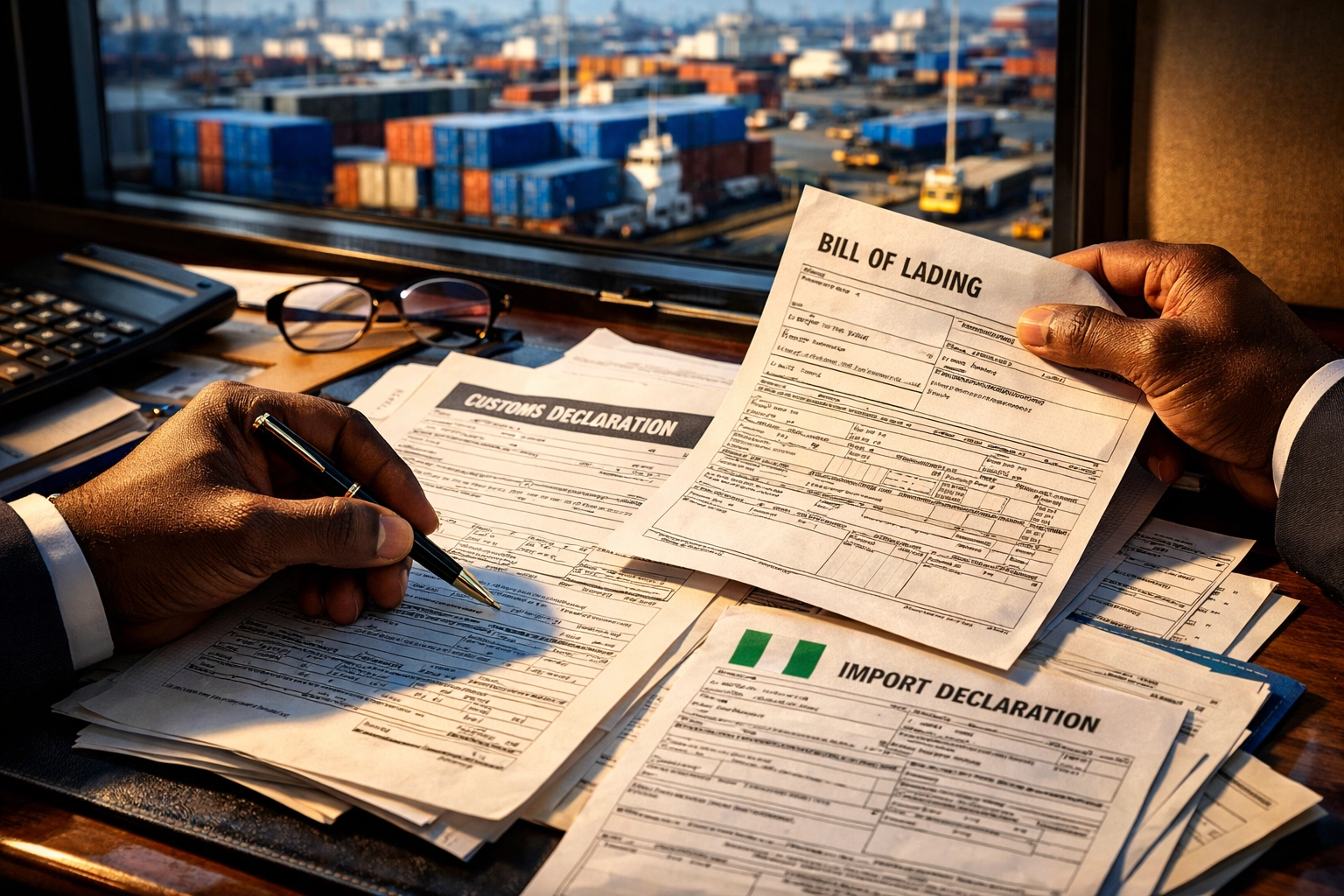
West African customs procedures can be…let's call them "complex." Documentation requirements vary. Unofficial fees sometimes appear. Processing times are unpredictable. And if you don't have someone locally who knows which office to visit, which official to speak with, and how to navigate the bureaucracy efficiently, your shipment can sit in limbo for days or weeks.
PSI's local teams include customs brokers and agents who've been working these ports for years. They know the regulations, they know the people, and they know how to expedite clearances without cutting corners or violating compliance standards. When you're shipping high-value equipment: say, telecommunications hardware or construction machinery: that expertise is worth its weight in gold.
Industry-Specific Considerations
Speaking of telecommunications logistics, let's zoom in on a specific use case. Nigeria's telecommunications sector is booming, which means constant demand for new equipment, replacement parts, and infrastructure upgrades.
But here's the catch: telecommunications equipment is expensive, often fragile, and requires specialized handling. You can't just toss a satellite component into a container and hope for the best. You need temperature-controlled ocean freight services, secure air freight services for urgent shipments, and local partners who understand how to handle sensitive technology.
At PSI, we've developed specialized processes for telecommunications logistics that combine our global shipping expertise with our West African ground game. When a telecom provider needs equipment delivered to a remote cell tower site, we don't just ship it to Lagos and call it a day. We coordinate with local transport partners who can navigate rough terrain, provide security for high-value cargo, and ensure installation teams have what they need when they need it.

The same principle applies to other industries we serve: construction, automotive, retail, oil and gas. Each sector has unique requirements, and local expertise helps us customize solutions rather than forcing square pegs into round holes.
The Competitive Advantage You Didn't Know You Needed
What's fascinating about this local expertise advantage is how often it gets overlooked in procurement decisions. Companies shopping for logistics providers tend to focus on price per container, transit times, and maybe tracking technology. All important factors, to be sure.
But they underestimate the value of local networks until something goes wrong. Until their shipment gets stuck at an international seaport because the documentation wasn't quite right. Until their driver can't find the delivery location and the whole schedule falls apart. Until they realize their freight forwarder has zero presence in West Africa and is basically winging it.
That's when the "local expertise premium" suddenly doesn't seem so expensive anymore.
Looking Ahead: The Future of West African Logistics
It will certainly be an interesting development to watch as e-commerce and international trade continue expanding across West Africa. Infrastructure is improving: slowly but steadily. Digital addressing systems are being piloted in some areas. Mobile payment adoption is accelerating.
But here's our take: even as these systems modernize, local expertise will remain critical. Why? Because relationships, trust, and cultural fluency can't be automated. The logistics company that combines global reach with hyperlocal knowledge will always have an edge over competitors trying to manage West Africa from a distance.
At PSI Global Logistics, we're betting on that hybrid model. We've got the infrastructure to handle ocean freight services and air freight services from Houston to Lagos, Accra, and beyond. But we've also invested decades into building local partnerships across West Africa: the kind of relationships you can't just buy or replicate overnight.
The Bottom Line
So let's bring this full circle. If you're shipping to Nigeria or anywhere in West Africa, here's what matters most:
Find a logistics partner with actual local presence. Not just a third-party agent they found on Google. Real employees, real relationships, real accountability.
Prioritize last-mile capabilities. Ocean freight and air freight get your cargo to the international seaport or airport. Local expertise gets it the final 10 miles to your customer's door: which is often the hardest part.
Understand payment and trust dynamics. If your logistics provider doesn't offer flexible payment options and can't explain how they build customer confidence, they're not equipped for this market.
Ask about industry-specific experience. Shipping retail goods is different from shipping telecommunications equipment or automotive parts. Make sure your provider has relevant expertise.
At PSI Global Logistics, we've spent years perfecting this formula. We know which international seaports have the shortest clearance times. We know which local transport partners deliver on their promises. And we know that "near the green gate after the palm tree" is a perfectly valid address if you have the right local guide.
That's the Nigeria connection. That's our secret sauce. And that's why door-to-door delivery in West Africa doesn't have to be a gamble: it can be a reliable, scalable part of your global supply chain.
Want to see how PSI's local expertise can transform your West African logistics? Give us a call at 713-589-2925 or visit psishipping.com to learn more. Because when it comes to shipping in this part of the world, local knowledge isn't just helpful; it's everything.

Leave A Comment