
8718 WESTPARK DR, HOUSTON, TX 77063
713-589-2925
INFO@PSISHIPPING.COM
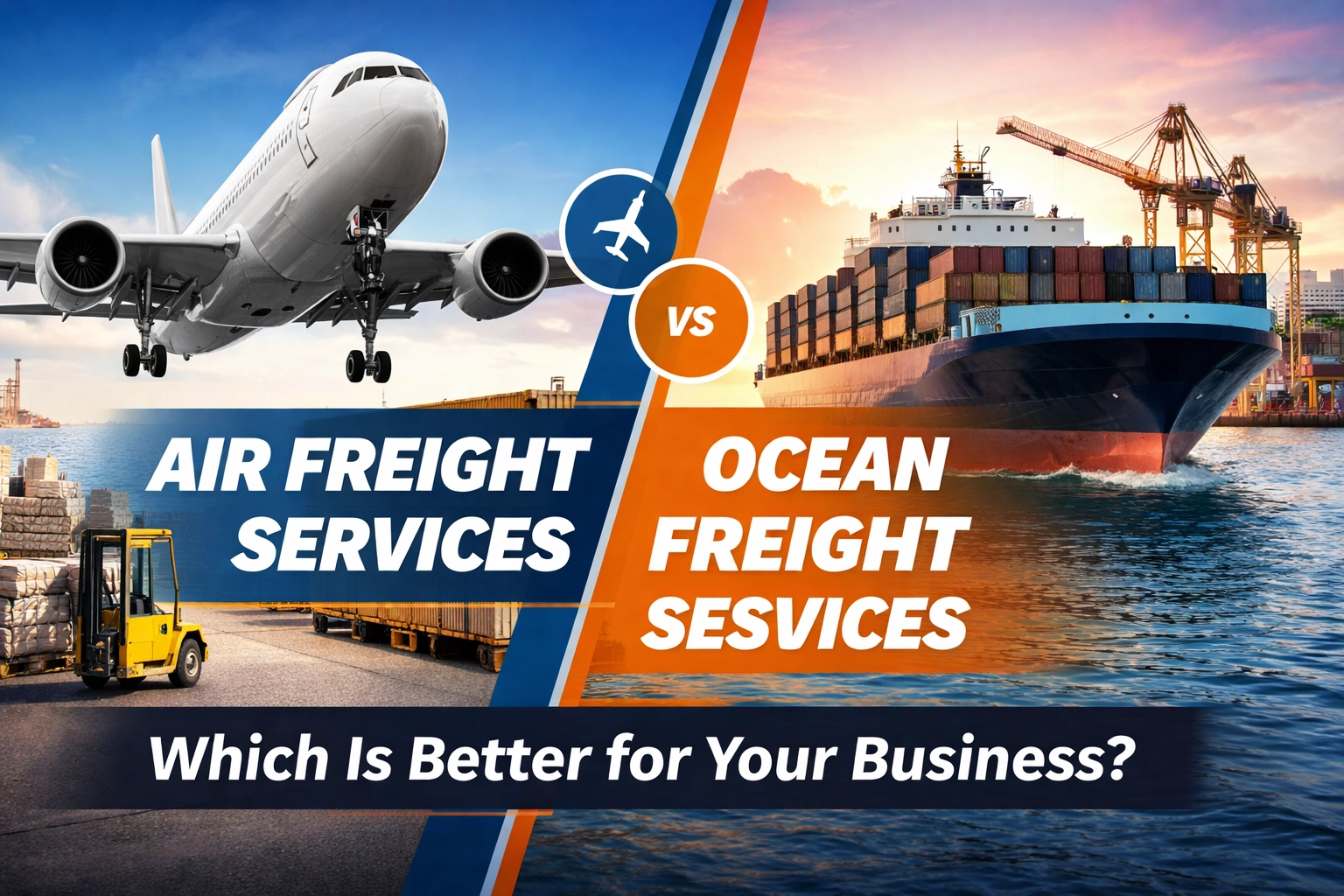
So, you've got cargo that needs to move across borders. Maybe it's headed to Lagos, London, or somewhere in between. And now you're staring at one of the oldest questions in international shipping: should you go with air freight services or ocean freight services?
It's a fair question. And honestly? There's no one-size-fits-all answer. The "better" option depends entirely on your business priorities: your budget, your timeline, the type of cargo you're shipping, and even your environmental goals.
But either way, let's break it down so you can make an informed decision. No fluff, no jargon overload. Just the facts you need.
What Are Air Freight Services?
Air freight services involve transporting goods via aircraft. It's fast, reliable, and ideal for shipments that need to arrive yesterday (or at least within a few days).
When you choose air freight, your cargo typically reaches its destination within 5 to 10 days, depending on the route and customs clearance. For businesses shipping time-sensitive products: think electronics, pharmaceuticals, perishable goods, or urgent spare parts: air freight is often the only viable option.
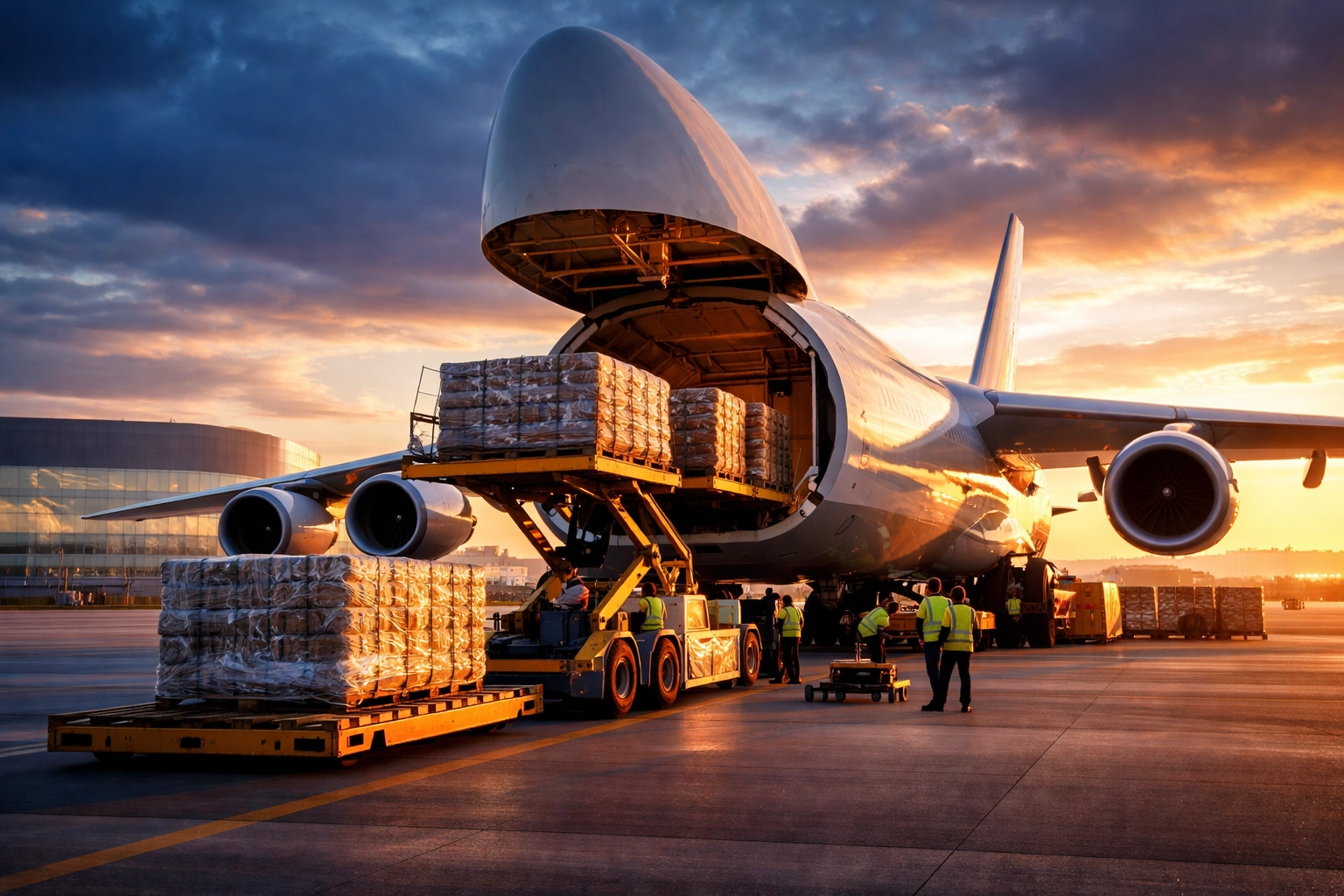
The trade-off? Speed comes at a premium. Air freight tends to cost more per kilogram than ocean freight, especially for larger shipments. But for high-value goods where delays could mean lost revenue or spoiled products, the investment often makes sense.
What Are Ocean Freight Services?
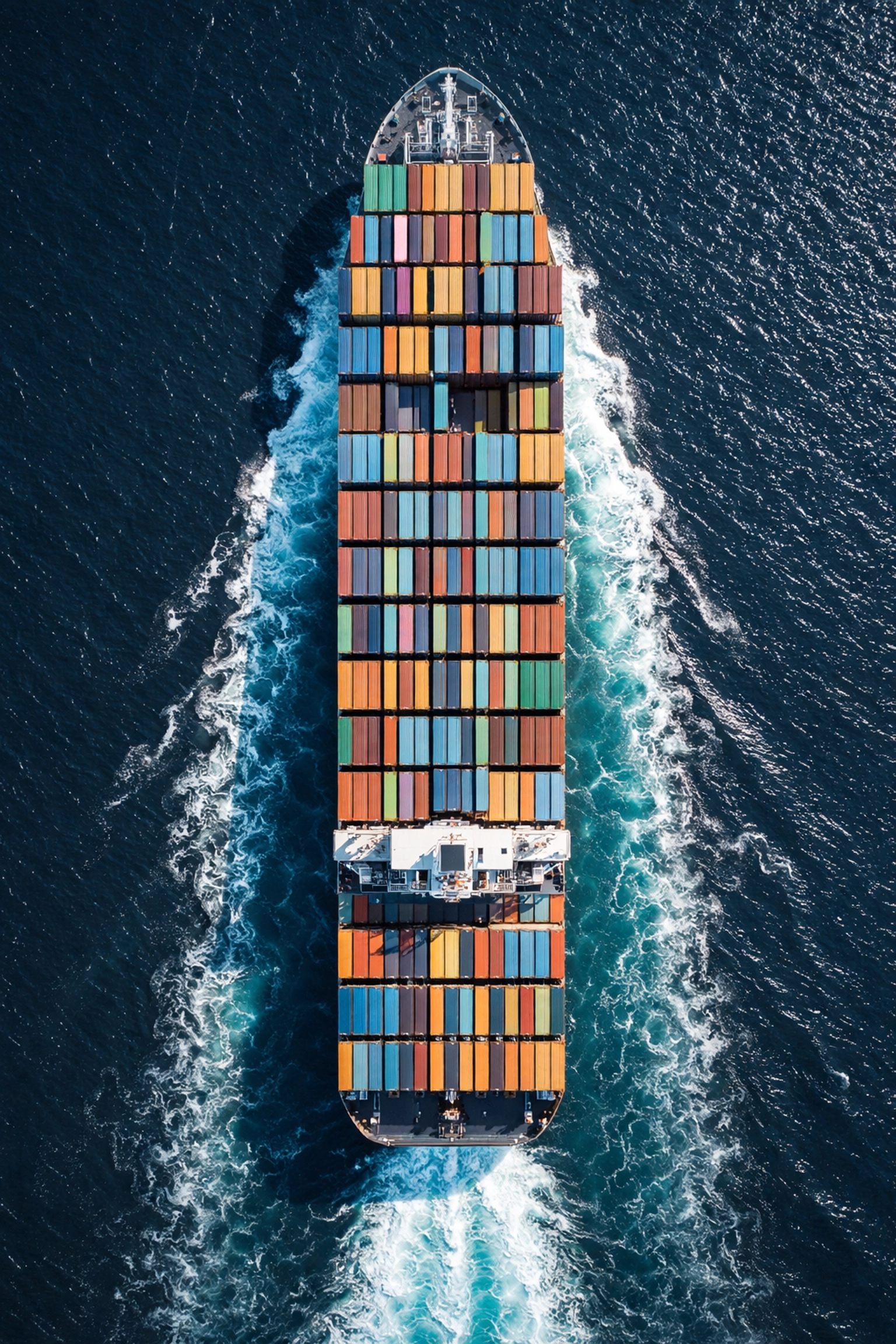
Ocean freight services involve shipping goods via cargo vessels across seas and oceans. It's the backbone of global trade, moving approximately 90% of the world's goods.
Transit times are longer: anywhere from 15 to 70 days depending on the origin, destination, and route. But what ocean freight lacks in speed, it makes up for in capacity and cost-effectiveness.
If you're moving large volumes, heavy equipment, or bulk cargo, ocean freight is typically the more economical choice. You can ship full container loads (FCL) or share container space with other shippers through less-than-container-load (LCL) options.
The Key Differences at a Glance
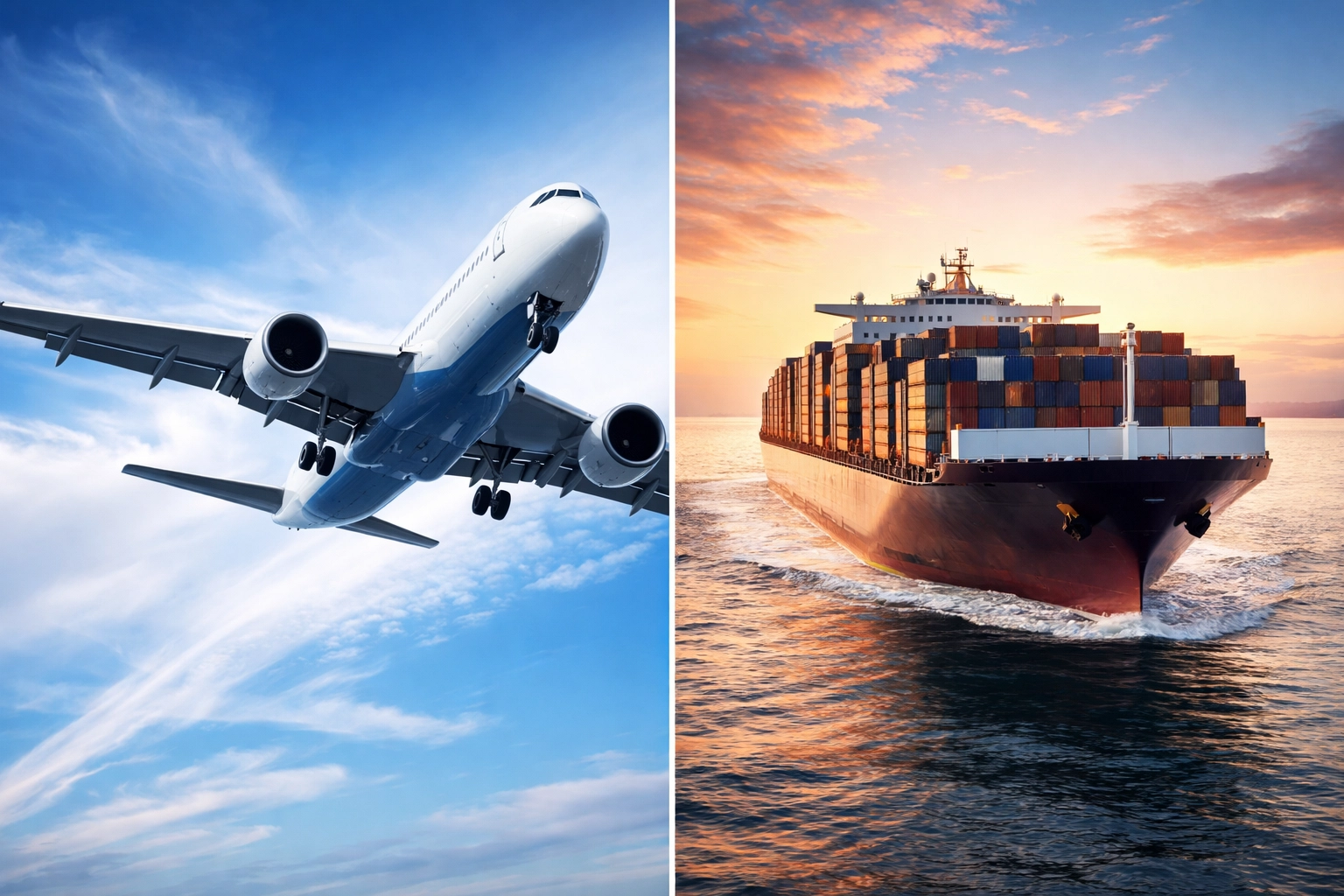
Let's put these two shipping methods side by side. Why? Because sometimes a quick comparison helps clarify things faster than paragraphs of explanation.
Speed
Air freight wins here, hands down. We're talking 5-10 days versus 15-70 days for ocean freight. If your customer needs that shipment within a week, air is your only real option.
Cost
Ocean freight is substantially cheaper, especially for shipments over 150 kg. For smaller shipments under 150 kg, air freight becomes more cost-competitive. It's worth noting that air freight prices can be volatile: booking in advance typically yields better rates, while last-minute bookings can cost 3-5 times more.
Cargo Capacity
Ocean freight offers dramatically more capacity. A single shipping container can hold volumes that would require multiple air cargo shipments. Plus, ocean carriers tend to be more flexible with cargo types and have fewer restrictions on what goods they'll accept.
Environmental Impact
This one matters more than ever. Ocean freight has a substantially better carbon footprint than air freight. If your business is focused on reducing emissions and meeting sustainability goals, ocean shipping is the more environmentally responsible choice.
Reliability
Both modes have their strengths. Air freight offers more predictable schedules with less weather-related disruption. Ocean freight schedules can be affected by port congestion, weather patterns, and vessel delays: but modern tracking technology has made ocean shipments much more transparent.
When Should You Choose Air Freight Services?
Air freight makes the most sense when time is your most valuable resource. Here are scenarios where it's the clear winner:
High-value, time-sensitive goods: Electronics, medical equipment, pharmaceuticals, and fashion items that need to hit shelves quickly.
Perishable products: Fresh produce, flowers, seafood, and other items with short shelf lives that can't survive weeks at sea.
Urgent shipments: Emergency spare parts, last-minute inventory replenishment, or time-critical documents.
Smaller shipments: When you're shipping lightweight items under 150 kg, the cost difference between air and ocean narrows significantly.
Remote destinations: Some locations are more easily accessible by air than by sea, especially landlocked countries or regions with limited port infrastructure.
If you're shipping from Houston to Nigeria and need your cargo there fast, for example, air freight is often the smartest route.
When Should You Choose Ocean Freight Services?
Ocean freight shines when you're playing the long game and cost efficiency matters. Consider ocean shipping when:
You're moving large volumes: Bulk cargo, heavy machinery, vehicles, and large equipment are built for ocean containers.
Budget is a priority: If timing allows flexibility, the cost savings with ocean freight can be significant: sometimes 80-90% less than air for equivalent volumes.
You're shipping low-value goods: When the profit margin on your products is slim, expensive air freight can eat into your bottom line.
You have 3+ weeks of lead time: If your supply chain planning allows for longer transit times, ocean freight makes economic sense.
Sustainability matters: For businesses committed to reducing their carbon footprint, ocean freight is the greener choice.
The Middle Ground: Expedited Ocean LCL
Here's something worth considering: expedited ocean LCL (Less than Container Load) services. It's a middle-ground option that can compete with air freight on speed while remaining more affordable and eco-friendly.
This hybrid approach works well for businesses that don't need air-speed delivery but can't wait the full ocean freight timeline. It will certainly be an interesting development to watch as more shippers discover this option.
Why PSI Global Logistics for Both Air and Ocean Freight?
It goes without saying that choosing the right freight method is only half the battle. The other half? Finding a logistics partner who can execute flawlessly regardless of which mode you choose.
At PSI Global Logistics, we specialize in both air freight services and ocean freight services. We're not a one-trick pony pushing you toward a single solution. Instead, we analyze your specific needs: timeline, budget, cargo type, destination: and recommend the option that actually makes sense for your business.

What's more, our team handles the complexities that come with international shipping: customs documentation, regulatory compliance, cargo tracking, and last-mile delivery. Whether your shipment is flying across the Atlantic or sailing to West Africa, we've got eyes on it every step of the way.
We maintain warehouse locations strategically positioned to support both air and ocean shipments. Curious about where our warehouses are located? We're set up to move your cargo efficiently from origin to destination.
And if you're wondering about which countries we ship to: the list is extensive. From Nigeria to the UK to destinations across the globe, PSI Global Logistics has the network and expertise to get your goods where they need to go.
Making Your Decision
So, which is better: air freight services or ocean freight services?
The honest answer: it depends on what "better" means for your business.
If speed and reliability are non-negotiable, air freight is your answer. If cost savings and large-volume shipping are priorities, ocean freight wins. And if you're somewhere in between, there are hybrid solutions worth exploring.
The best approach? Talk to a logistics expert who can evaluate your specific situation. Every shipment is different, and cookie-cutter advice rarely serves anyone well.
Ready to figure out the best shipping strategy for your next shipment? Contact PSI Global Logistics today. We'll help you weigh the options: no pressure, just straight answers.
8718 WESTPARK DR, HOUSTON, TX 77063
713-589-2925
INFO@PSISHIPPING.COM

Leave A Comment